Podcast episode 9: The Neogrammarians

Aller lautwandel, so weit er mechanisch vor sich geht, vollzieht sich nach ausnahmslosen gesetzen

In this episode, we introduce the Neogrammarians, the dominant school of linguistics in the closing decades of the nineteenth century.
Read more ›

Posted in Podcast

Recent publications in the history and philosophy of the language sciences – September 2020

Maria Giovanna SANDRI. 2020. Trattati greci su barbarismo e solecismo. Introduzione ed edizione critica. Berlin/ Boston: De Gruyter. Untersuchungen zur antiken Literatur und Geschichte. 135. XI + 320 p. ISBN 978-3-11-065908-5
Publisher’s webpage

Test Cover Image of:  Trattati greci su barbarismo e solecismo

Scholarship has rarely taken into consideration the Greek grammatical treatises on barbarism and solecism. While some of them remain unpublished down to the present day, others were edited within the large 18th- and 19th-century collections of Greek grammatical and rhetorical works, although the chosen manuscript basis was inadequate, sometimes indeed wholly arbitrary. For this reason, a new edition was urgently needed. The book is opened by a general critical overview of the phenomenon of linguistic correctness in the Greek-speaking world: it is against this benchmark of Hellenismós that barbarism and solecism acquire their sense as phenomena of corruption. The present critical edition has the ambition to publish the known ancient and Byzantine texts related to these phenomena, as they appear in manuscripts preserved throughout the world: a fresh check of all printed library catalogues has revealed 88 relevant codices, all of which are here described, philologically investigated, and used for the constitutio textus. Three texts receive here their editio princeps, others rest on a wider textual basis, and each is equipped with a selective critical apparatus: hypotheses on chronology and authorship can therefore rely on much firmer elements than before.

Read more ›
Posted in Publications

Significs and Jacques van Ginneken

Els Elffers
University of Amsterdam

Introduction

The Dutch Signific movement (ca. 1900–1960) is not widely known, although in the last few decades it has attracted considerable scholarly interest. This has resulted in some valuable publications (see the bibliography). The movement’s minor characters, however, have not been given much attention so far. This article focuses on the contribution to Significs of one of these minor characters, the Dutch linguist Jacques van Ginneken S.J. (1877–1945), who was involved in the movement from 1919 to 1924. During this period, Van Ginneken’s contribution carried some weight, but failed to exert a substantial influence. This was due to his brief and not very intense involvement, and, moreover, to the fact that his ideas about language and communication differed considerably from those of other members of the movement. Given this difference, the following questions will receive special attention, alongside more general issues: Why did Van Ginneken join the movement at all, and why did he continue his membership for some time? A further question is: Why did he eventually leave the movement?[1]

Preliminary information about Significs

Significs was an idealistic movement. Its core activities were language analysis, language criticism and, ultimately, language reform. The aim was: to gather together a group of prominent broad-minded intellectuals of various disciplines, in order to create, through language reform, new types of communication, which would be unaffected by vagueness, ambiguities, hidden prejudices and misleading formulations. Misunderstandings and mutual distrust would thus be avoided, and a better and more peaceful world would be made possible. Read more ›

Posted in Article

PhD Position KU Leuven: Languages Writing History – reopened

This post has just reopened.

KU Leuven is advertising a four-year PhD position at the Faculty of Arts as part of the FWO-funded project “Languages writing history: the impact of language studies beyond linguistics (1700-1860)”. The aim of this project is to study the history of the language sciences and the formation of linguistics as a discipline from a ‘post-disciplinary’ point of view: how the study of language evolved from an instrumental subject into an autonomous domain, how it affected other fields of study, and what was lost in the process of discipline formation. The selected candidate will pursue a research project that addresses these issues under the supervision of Dr Toon van Hal (Historical, Comparative, and Applied Linguistics) and Dr Floris Solleveld (Cultural History since 1750). Read more ›

Posted in Jobs and funding

Podcast episode 8: Language as an institution – William Dwight Whitney

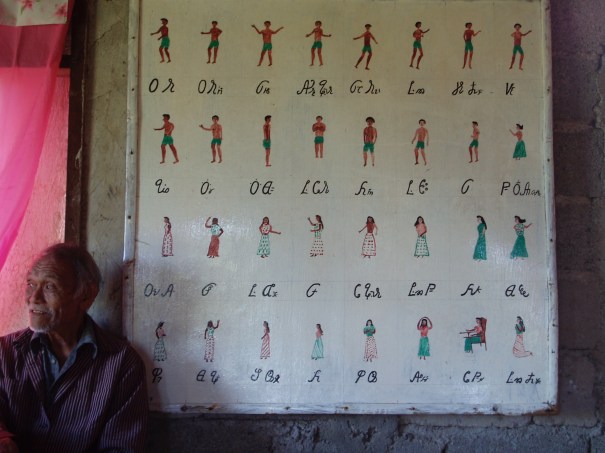
Table: Scale and Frequency of English Sounds

In this episode, we look first at the critiques of Schleicher’s “physical” and Steinthal’s “psychological” theory of language put forward by the American linguist William Dwight Whitney. We then turn to Whitney’s own conception of language as a “human institution” and its intellectual background.
Read more ›

Posted in Podcast

Recent publications in the history and philosophy of the language sciences – August 2020

Mårten SÖDERBLOM SAARELA. 2020. The Early Modern Travels of Manchu. A Script and Its Study in East Asia and Europe. Philadelphia: University of Pennsylvania Press. ncounters with Asia.  288 p. ISBN 9780812252071
Publisher’s website

16069

Manchu was a language first written down as part of the Qing state-building project in Northeast Asia in the early seventeenth century. After the Qing invasion of China in 1644, and for the next two and a half centuries, Manchu was the language of state in one of the early modern world’s great powers. Its prominence and novelty attracted the interest of not only Chinese literati but also foreign scholars. Read more ›

Posted in Publications, Uncategorized

CfP: History of language teaching research and theorization: 1945-2015

Tours, France, 2–4 June 2021 Read more ›

Posted in Announcements, Conferences and workshops

Recent publications in the history and philosophy of the language sciences – July 2020

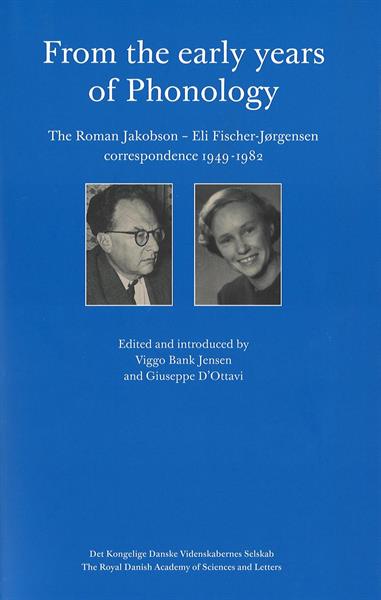
Viggo Bank JENSEN & Giuseppe D’OTTAVI (ed). 2020. From the early years of Phonology. The Roman Jakobson – Eli Fisher-Jorgensen correspondence (1949-1982). Copenhagen: The Royal Danish Academy of Science and Letters, Scientia Danica, Series H, Humanistica, 8, vol. 20. 402 pp. ISBN : 978-87-7304-432-2
Publisher’s website

600For more than 30 years, from 1949 till 1982, the two influential linguists Roman Jakobson (1896-1982) and Eli Fischer-Jørgensen (1911-2010) regularly exchanged letters. Now, almost 40 years after the last letter of the correspondence was signed, The Royal Danish Academy of Sciences and Letters is publishing the entire collection of preserved letters in which we are introduced to two strong personalities: the Russian born linguist Roman Jakobson and the Danish phonetician and general linguist Eli Fischer-Jørgensen, both members of the Royal Academy, Eli being the first ever Danish woman elected a member. Read more ›

Posted in Publications, Uncategorized

New posts January-June 2020

At hiphilangsci.net, we’re now embarking on a brief break for the northern hemisphere summer. We’ll be back at the beginning of September with new posts and podcast episodes. In the meantime, be sure to catch up on all the great contributions we’ve had so far this year:

Has the LSA Been a Generativist-Dominated Organisation?
Fritz Newmeyer (UBC, Simon Fraser, U Washington)

Der Siegener Diskursmonitor – ein Onlineportal zur strategischen Kommunikation
Clemens Knobloch (Siegen)

Being critical: Elements of Critical Theory in the work of critical discourse analysts
Diego Romeo (Edinburgh)

What is Syriac and what is Aramaic according to Syriac grammarians (8th-16th cent.)
Margherita Farina (HTL, Paris)

Galant grammarians: Donneau de Visé’s Mercure galant
Doyle Calhoun (Yale)

Johann Christoph Adelung, a forerunner of modern bilingual lexicography
Jacques François (Caen-Normandy)

Lénine, Saussure et la théorie des hiéroglyphes
Patrick Sériot (Lausanne)

Racialization, language science, and nineteenth century anthropometrics
Margaret Thomas (Boston College)

And be sure to have a listen to our History and Philosophy of the Language Sciences Podcast

Posted in Announcements

Podcast episode 7: Interview with Clara Stockigt on missionary grammars in Australia

Clara Stockigt

In this interview, we talk to Dr Clara Stockigt about missionary grammars in Australia and their links to the academic linguistic scholarship of the time.
Read more ›

Posted in Podcast

Upcoming events


21-22 May 2026
Prague (Czech Republic)
Some Less Well-Known Relations of the Prague School: Networks and Dynamics of Cultural Transfer


2-4 September 2026
Nottingham (UK)
Henry Sweet Society Colloquium 2026
(Non-)Native Speakers in the History of Linguistic Ideas


10-11 September 2026
Fribourg (Switzerland)
The Prague Linguistic Circle in Geneva and Paris: Circulations and Decenterings


16–18 September 2026
Rome (Italy)
Studienkreis Geschichte der Sprachwissenschaft
Universality and Universals in the History of Linguistics


19-21 November 2026
Sofia (Bulgaria)
La linguistique ‘fonctionnelle’ cent ans après la fondation du Cercle linguistique de Prague


10-11 December 2026
Paris (France)
Language, Norm, and Society: The Prague Linguistic Circle (1926-2026) in the Face of Contemporary Challenges


28-29 January 2027
Paris (France)
SHESL Conference 2027
History of terminology – Diachronic terminology The emergence of a terminological conscienceness


31 March–3 April 2027
Vigo (Spain), Vila Real (Portugal)
13th International Conference on Missionary Linguistics


9-11 June 2027
Aubervilliers (France)
SHESL Conference
Esperanto – 140 years: this is no longer a project


16–19 June 2027
Flensburg (Germany)
Language abuse and language criticism in the history of linguistics


23-27 August 2027
Niterói, Rio de Janeiro (Brazil)
ICHoLS XVII