Podcast episode 27: Interview with Peter Trudgill on sociolinguistic typology

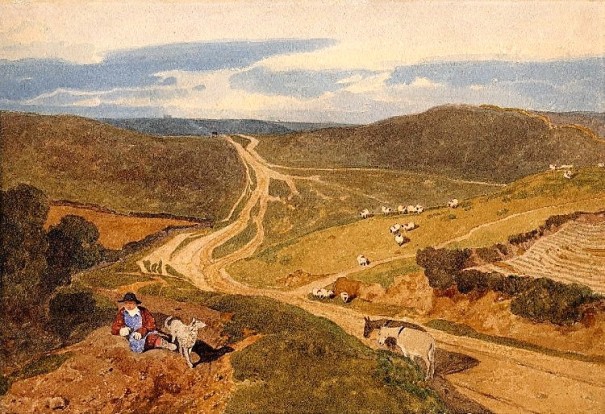
John Sell Cotman – Mousehold Heath (1810)

In this interview, we talk to Peter Trudgill about how the structure of speaker communities may influence the structure of languages.

Read more ›
Posted in Podcast

Podcast episode 26: Interview with Philipp KrĂ€mer on creoles and creole studies

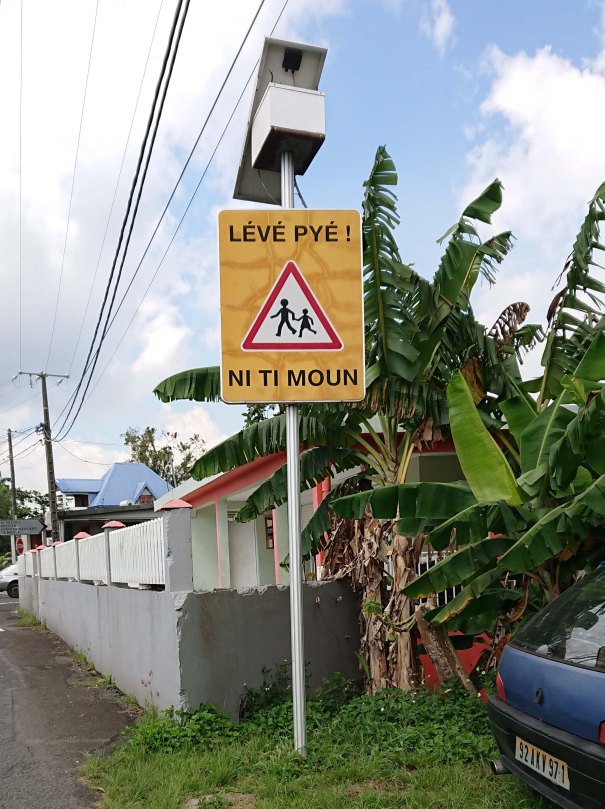
Street sign

In this interview, we talk to Philipp KrÀmer about the history of the study of creole languages and present-day efforts to standardise creoles around the world.

Read more ›
Posted in Podcast

Recent publications in the history and philosophy of the language sciences-June 2022

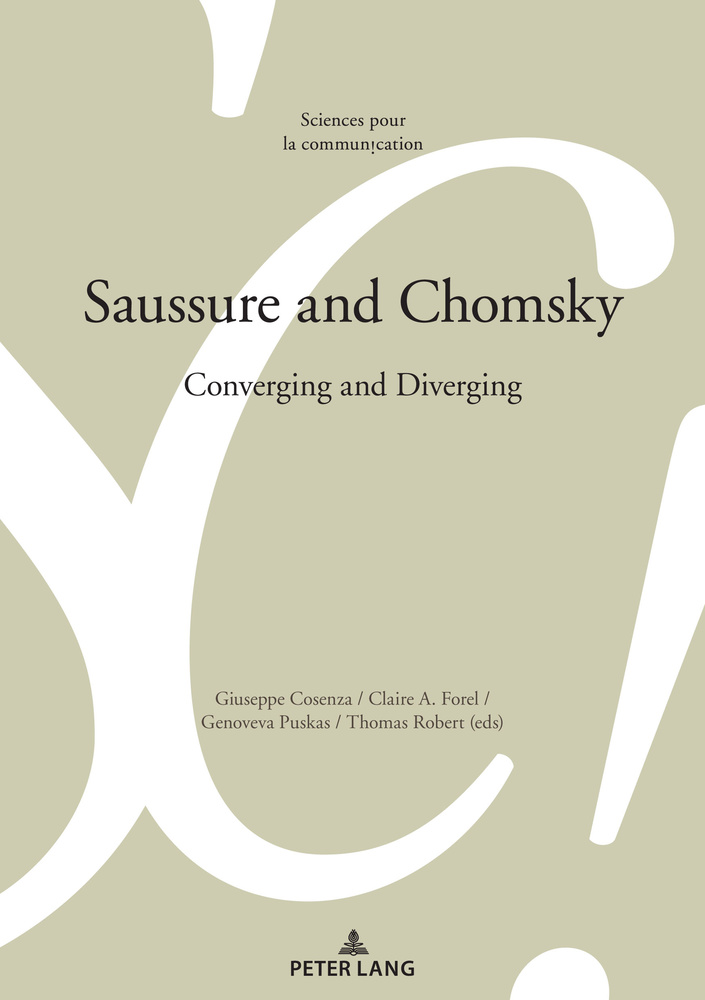
Giuseppe Cosenza, Claire A. Forel, Genoveva Puskas & Thomas Robert, ed. 2022. Saussure and Chomsky. Converging and Diverging. Lausanne: Peter Lang. 172 p. DOI: https://doi.org/10.3726/b19300
Publisher’s website

Saussure and Chomsky, the two major figures in linguistics of the twentieth century and beyond, have often been compared. The collection of bilingual English and French papers of this volume offers different perspectives, defended by two generations of researchers, on what brings together and distinguishes the Saussurean and Chomskyan theories. The papers all highlight that the two theories offer points of convergence, as they are interested in the same human manifestation, while divergence emerges from the fact that they build on two different premises about the nature of their object of study. The authors do not always reach similar conclusions but offer thoughts and material that will definitely help readers form their own opinion.

Read more ›
Posted in Publications

Podcast episode 25: Interview with Felicity Meakins on contact linguistics

Gurindji kids

In this interview, we talk to Felicity Meakins about Pidgins, Creoles, and mixed languages. We discuss what they are, and how they are viewed in both linguistic scholarship and in speaker communities.

Read more ›
Posted in Podcast

Recent publications in the history and philosophy of the language sciences – May 2022

Roger Schöntag. 2022. Das VerstĂ€ndnis von VulgĂ€rlatein in der FrĂŒhen Neuzeit vor dem Hintergrund der questione della lingua. TĂŒbingen: Gunter Narr Verlag. 761 p. ISBN: 978-3-8233-8540-0
Publisher’s webiste

Die sprachliche Verwandtschaft zwischen Latein und Italienisch waren im Mittelalter nur vage bekannt. Dies Ă€ndert sich mit einer Diskussion im Jahre 1435, an der maßgebliche Humanisten wie Leonardo Bruni und Flavio Biondo beteiligt sind, die sich im Geiste der RĂŒckbesinnung auf die Antike fragen, welche Sprache, d.h. welche Art von Latein, die Römer einst gesprochen haben mögen. Hieraus entspinnt sich nun eine Debatte (bis 1601) zwischen Lateinhumanisten und VulgĂ€rhumanisten, an deren Ende sich die Erkenntnis durchsetzt, dass sich das Italienische (und andere romanische Sprachen) aus dem gesprochenen Latein der Antike, dem VulgĂ€rlatein, herleitet. Die sprachwissenschaftliche Aufarbeitung dieser Debatte im Rahmen der italienischen Sprachenfrage (questione della lingua) ist Ziel und Gegenstand vorliegender Abhandlung.

Read more ›
Posted in Publications

Cfp: SHESL Conference 2023

Call for papers
SHESL Conference 2023
New historical and diachronic perspectives on grammaticalization

Paris, 12–13 January 2023

The SociĂ©tĂ© d’histoire et d’épistĂ©mologie des sciences du langage (SHESL) invites abstracts for the 2023 annual conference on the topic “New historical and diachronic perspectives on grammaticalization”.

This conference is intended as an opportunity to present and discuss contributions for a projected edited volume on the historical background and epistemological foundations of grammaticalization research. For this reason, the conference will consist of a small number of one-hour sessions, each with a 45-minute presentation and 15-minute question time.

Please send abstracts for contributions by 15 August 2022 to grammaticalisation@ens.psl.eu
Abstracts should be around 250 words long and include a bibliography.

Read more ›
Posted in Conferences and workshops

Recent publications in the history and philosophy of the language sciences – April 2022

Camille Joseph & Isabelle Kalinowski. 2022. La Parole inouĂŻe. Franz Boas et les textes indiens. Toulouse: Anacharsis. 198 p. ISBN: 9791027904365
Publisher’s website

Franz Boas (1858-1942) est considĂ©rĂ© comme le pĂšre fondateur de l’anthropologie amĂ©ricaine. Par-delĂ  de vastes collectes d’objets, il s’est livrĂ© pendant des dizaines d’annĂ©es Ă  une pratique frĂ©nĂ©tique d’édition de textes indiens. Pour bien des raisons, notamment parce qu’il s’abstenait systĂ©matiquement de commenter les textes publiĂ©s, les laissant Ă  nu sur des milliers de pages, cette entreprise est dĂ©routante.

Cet ouvrage se propose d’élucider ses mĂ©thodes de travail en se focalisant sur l’attention portĂ©e Ă  la transcription puis Ă  la traduction du matĂ©riau collectĂ© : comment entendre, comprendre, transcrire et traduire des langues et rĂ©cits de tradition orale ? Comment, au fond, s’est construit un vaste matĂ©riau ethnographique textuel et matĂ©riel – dont Claude LĂ©vi-Strauss entre autres a su maintes fois tirer parti ?
Ce sont ici, autour de questions fondatrices, les contours d’une autre anthropologie possible qui sont esquissĂ©s.

Read more ›
Posted in Publications

Podcast episode 24: Interview with Lorenzo Cigana on the Copenhagen Circle

Louis Hjelmslev

In this interview, we talk to Lorenzo Cigana about Louis Hjelmslev and the Copenhagen Linguistic Circle.

Read more ›
Posted in Podcast

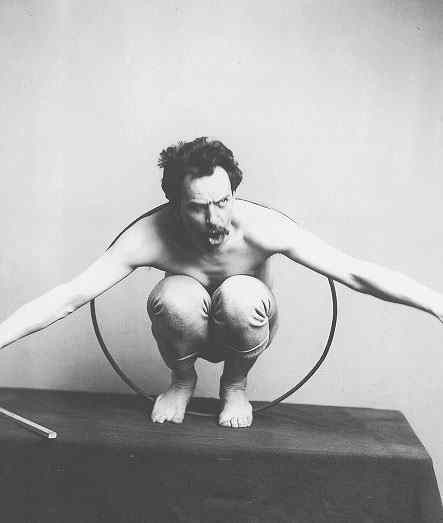
Colorless green ideas and the others

Martin Konvička (Freie UniversitĂ€t Berlin)*

1 Colorless green ideas

In the opening pages of his Syntactic Structures (1957: 15)[1], Noam Chomsky demonstrates the independence of grammar (or syntax) from semantics by referring to the meaningless, yet grammatically well-formed – and by now famous – utterance in (1). He contrasts it with a very similar one (2) which is, however, due to its different word order neither meaningful nor well-formed.

(1) Colorless green ideas sleep furiously.

(2) *Furiously sleep ideas green colorless.

Apart from being widely debated in linguistic and philosophical texts, the sentence in (1) has become a cultural phenomenon and even an inspiration for literature and music.[2] Although arguably the best-known example of its kind, Chomsky’s colorless green ideas is not the first instance of such an example, as I will show in this blog post.

Read more ›
Tagged with: , , ,
Posted in 19th century, 20th century, History, Linguistics, Philosophy, Semantics, Syntax

Recent publications in the history and philosophy of the language sciences – March 2022

Antoinina Bevan Zlatar, Mark Ittensohn, Enit Karafili Steiner & Olga Timofeeva, ed. 2021. Words, Books, Images, and the Long Eighteenth Century. Amsterdam: John Benjamins. FILLM Studies in Languages and Literatures, 16. 252 pp. DOI: https://doi.org/10.1075/fillm.16
Publisher’s website

The essays collected in this volume engage in a conversation among lexicography, the culture of the book, and the canonization and commemoration of English literary figures and their works in the long eighteenth century. The source of inspiration for each piece is Allen Reddick’s scholarship on Samuel Johnson (1709-1784), the great English lexicographer whose Dictionary (1755) included thousands upon thousands of illustrative quotations from the “best” authors, and, more recently, on Thomas Hollis (1720-1774), the much less well-known bibliophile who sent gifts of books by a pantheon of Whig authors to individuals and libraries in Britain, Protestant bastions in continental Europe, and America. Between the covers of Words, Books, Images readers will encounter canonical English authors of prose and poetry—Bacon, Milton, Defoe, Dryden, Pope, Richardson, Swift, Byron, Mary Shelley, and Edward Lear. But they will also become acquainted with the agents of their canonization and commemoration—the printers and publishers of Grub Street, the biographer John Aubrey, the lexicographer and biographer Johnson, the bibliophile Hollis, and the portrait painter Reynolds. No less crucially, they will meet fellow readers of then and now—women and men who peruse, poach, snip, and savour a book’s every word and image.

Read more ›
Posted in Publications

Upcoming events


21-23 January 2026
Paris
SHESL Conference 2026
Versification and the History of Linguistic Ideas


17–20 March 2026
Universitat Pompeu Fabra, Barcelona (Spain)
XV Congreso Internacional de la Sociedat Española de HistoriografĂ­a LingĂŒĂ­stica
Prescriptivism and descriptivism from the peripheries


23–25 March 2026
Montpellier (France)
Asian Languages in the History of Lexicography


2-4 September 2026
Nottingham (UK)
Henry Sweet Society Colloquium 2026
(Non-)Native Speakers in the History of Linguistic Ideas


10-11 September 2026
Fribourg (Switzerland)
The Prague Linguistic Circle in Geneva and Paris: Circulations and Decenterings


19-21 November 2026
Sofia (Bulgaria)
La linguistique ‘fonctionnelle’ cent ans aprùs la fondation du Cercle linguistique de Prague


23-27 August 2027
NiterĂłi, Rio de Janeiro (Brazil)
ICHoLS XVII