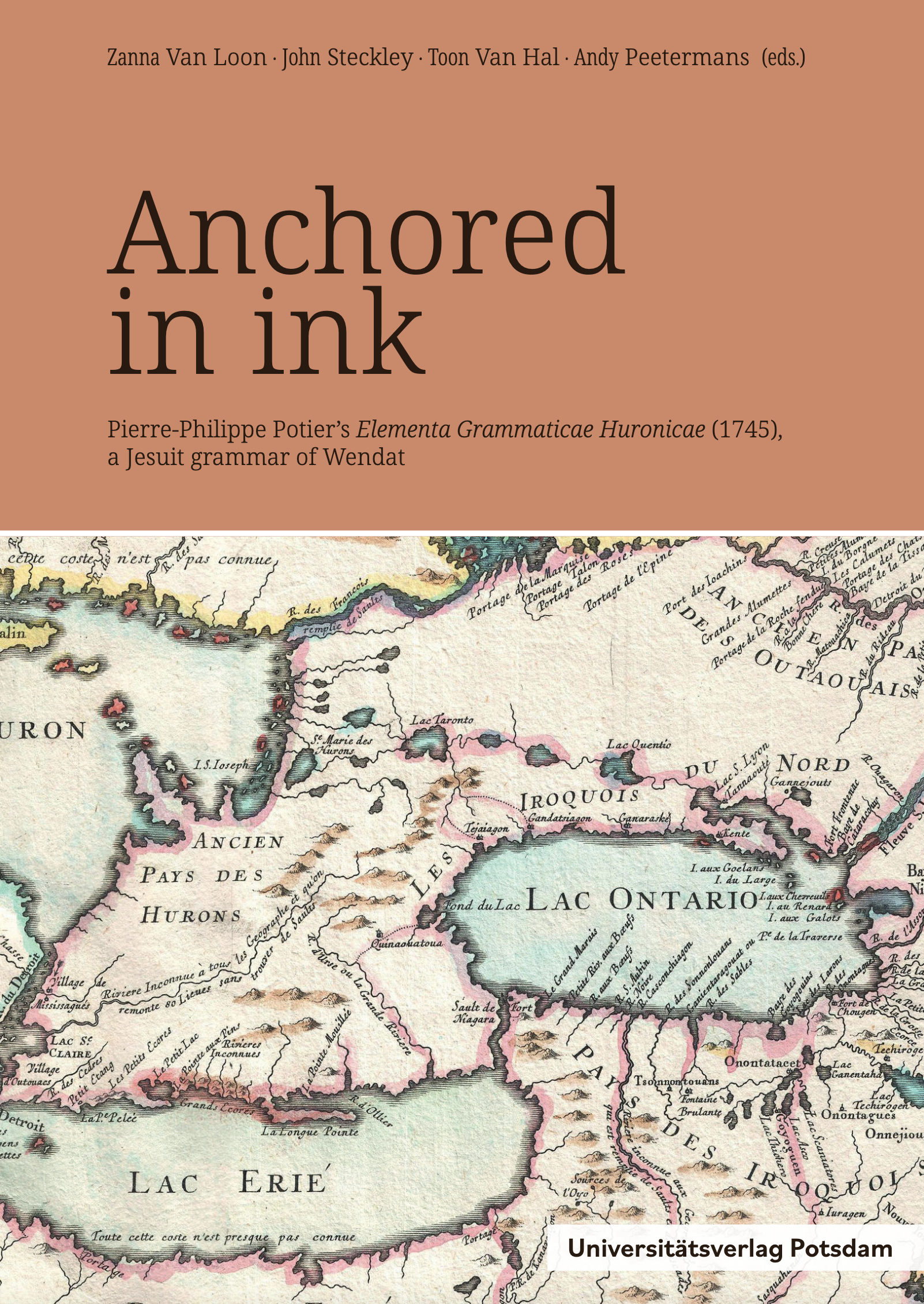
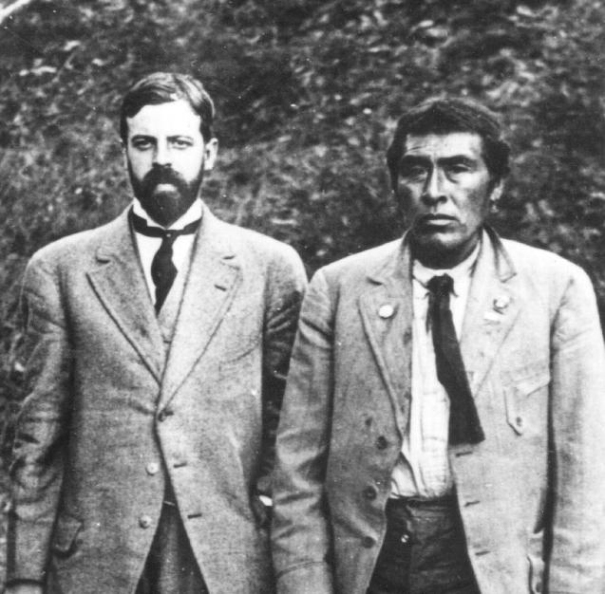
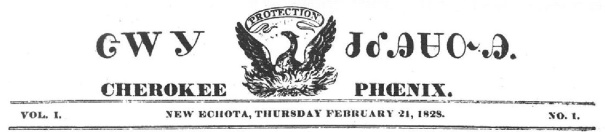
In this interview, we talk to Marcin Kilarski about the history of the documentation and description of the languages of North America.
Read more ›
In this interview, we talk to Marcin Kilarski about the history of the documentation and description of the languages of North America.
Read more ›Review of
Randy Allen Harris: The Linguistics Wars: Chomsky, Lakoff, and the Battle over Deep Structure. Second edition. Oxford University Press. 2021.
John Goldmith
University of Chicago
Randy Harris has written an extremely engaging account of the rise of generative syntax and of some of the linguists who participated in this development, focusing on the scruffy fights that held a lot of people’s attention in the second half of the 1960s, and then tracking the trajectories of the linguists after that very belligerent moment. The book is great fun to read—Randy is a terrific writer, the likes of which we rarely see among academics—and along the way, the reader learns a lot of linguistics. (We’ll come back to that last point, though, because there are some points, not all of them fine points, which deserve some discussion.) This book is a greatly revised second edition of a book that came out in the early 1990s, and this new edition is longer and covers much more territory. While it is as punchy and pugnacious as the first, it is also more thoughtful and considered. Randy’s academic specialization is rhetoric, so you’ll learn a lot about rhetoric, and rhetoric has a lot to do with this story, which starts off as the story about the first rupture inside the group of young Turks known as generative grammarians back in the mid 1960s, pitting Chomsky and a few of his students, like Ray Jackendoff, against the four horsemen of the Generative Semanticists (Haj Ross, Jim McCawley, Paul Postal, and George Lakoff). Without conflict, there’s no story to tell, so conflict is at the center of the book, but it’s not an evenly matched conflict: it’s CHOMSKY in upper case letters against the others, whose names are in lower case and not set out in neon lights the way a certain other linguist’s are.
Read more ›Janette Friedrich, ed. 2022. Karl Bühler und das Wiener Psychologische Institut. Dokumente und Fundstücke. Herausgegeben, zusammengestellt und kommentiert von Janette Friedrich. Lausanne: sdvig press. Bühleriana 1. 390 p. ISBN: 9782970082958
Publisher’s website
Mit dem Band Karl Bühler und das Wiener Psychologische Institut. Dokumente und Fundstücke beginnen wir die Veröffentlichung der Forschungsreihe Bühleriana, die in das Website-Projekt Bühler Digital (http://karlbuehler.org) integriert ist. Damit bieten wir den Leserinnen und Lesern nicht nur eine Buchreihe, sondern zusätzlich auch einen Raum, ein Feld, wie Bühler sagen würde, in dem die in den Bühleriana formulierten Erkenntnisse, Thesen, Hypothesen und Fragen mit schon existierenden Wissensbeständen in Beziehung gesetzt werden können. Ein wichtiges Instrument dazu stellen die auf der Website vorhandenen Bibliographien zu den Arbeiten Karl Bühlers wie auch zu den Forschungen über ihn dar. Für den vorliegenden Band besonders interessant erscheint uns die ebenfalls auf der Web-site veröffentlichte Zeittafel. Sie integriert einen großen Teil der bisher gefundenen Informationen zu den wissenschaftlichen Tätigkeiten Karl Bühlers, seiner Frau Charlotte und einiger der Mitarbeiterinnen und Mitarbeiter am Wiener Psycho-logischen Institut. Die damit zur Verfügung stehenden Daten und ihre je nach Forschungsinteresse mögliche Strukturierung werden bestimmte Momente in den Tätigkeitsfeldern Bühlers sichtbar machen, die bisher vernachlässigt wurden. Dabei kann es sich um institutionelle Faktoren handeln, wie z.B. den großen Frauenanteil am Wiener Psychologischen Institut – für die Wissenschaften Anfang des 20. Jahrhunderts nichts Selbstverständliches. Oder um Bühlers Projekt einer Theoretischen Psychologie, das er in den 1930er Jahren begann und bis an sein Lebensende nicht aufgegeben hat. Wir hoffen, dass auf diese Weise neue Fragen und Erkenntnisse nicht nur im Rahmen der Bühler-Forschung, sondern auch für die Rekonstruktion der Geistesgeschichte der Psychologie im 20. Jahrhundert formuliert werden können.
Read more ›
In this episode, we begin our exploration of American linguistics by looking at the innovative contributions of Franz Boas (1858–1942) and his circle of students.
Read more ›Inverview with Irène Rosier-Catach, prepared by Émilie Aussant, Chloé Laplantine and Rafaello Pisu.
Recorded in Paris, on June 30, 2021 at Université Paris Cité by Thomas Zoritchak.
Tranlation by Andrew Eastman and Amanda Murphy.
Music extracted from Luciano Berio & Cathy Berberian. Recital 1 For Cathy / Folk Songs / Weill-Berio Songs. RCA Gold Sea. 1973.
Bonjour Irène, merci à toi d’avoir accepté cet entretien. Nous allons aujourd’hui parler de ton parcours, de ta carrière, des sujets auxquels tu t’es intéressée. Pourrais-tu nous dire comment tu en es venue à t’intéresser aux conceptions du langage au Moyen Âge, quels sont les auteurs qui t’ont intéressée et pour quelles raisons ?
Read more ›Mariana Münning. 2022. Sound, Meaning, Shape. The Phonologist Wei Jiangong (1901-1980) between Language Study and Language Planning. Heidelberg Asian Studies Publishing. 312 p. ISBN: 9783948791292
Publisher’s website.
One of the leading proponents of the radical linguistic reforms in 20th century China, Wei Jiangong remains hardly known in the West. This book describes how Wei, who was rooted in traditional philology and conceptualizing language as a tool, helped to promulgate a standard language, led the compilation of the world’s most popular dictionary, and helped to drive script reform. While these measures were characterized as violent intervention in the Chinese language sphere, Wei’s careful negotiating of linguistic description and political prescription illustrates how they also may have been steps that helped to achieve linguistic self-determination.
Read more ›
John Joseph
University of Edinburgh
One hundred years ago, Raymond de Saussure (1894-1971), the second son of Ferdinand and Marie de Saussure, published a review of a collection of papers by his father’s most famous and devoted student, Antoine Meillet (1866-1936). Saussure (henceforth the surname used alone will designate Raymond) was not a linguist, but a psychologist who had become attached to Freudian psychoanalysis. He was personally psychoanalysed by Freud, who contributed a preface to Saussure’s first book in 1922, the same year as the review of Meillet. Saussure was a founding member of the Société Psychanalytique de Paris in 1926, and his important role in establishing psychoanalysis in France and Geneva is chronicled in Roudinesco (1982).
Read more ›Didier Samain & Pierre-Yves Testenoire, ed. 2022. La linguistique et ses formes historiques d’organisation et de production. Paris: SHESL. HEL Livres 1. 336 p. ISBN : 979-10-91587-16-7. DOI: 10.5281/zenodo.6675029
Publisher’s website
La production et la transmission des savoirs scientifiques s’effectuent par des instances dédiées (exemplairement l’Université), mais aussi par la médiation de multiples structures, qui se sont agrégées autour d’une thématique (académies, sociétés savantes), d’une affiliation (dans le cas notamment des « écoles »), ou encore d’un projet (comme la grammatisation – l’individuation et la description – d’une langue vernaculaire). Quoique bien identifiées dans leurs aspects sociaux, ces structures sont moins souvent appréhendées dans toute la complexité de leurs apports spécifiques. Tel était donc l’enjeu du colloque consacré à « la linguistique et ses formes historiques d’organisation et de production » (Paris, 24-26 janvier 2019), à l’occasion du quarantième anniversaire de la Société d’histoire et d’épistémologie des sciences du langage.
La plupart des contributions au présent volume portent sur des périodes contemporaines de l’organisation moderne du savoir et montrent comment ces structures se sont positionnées par rapport aux institutions déjà existantes. Mais le lecteur y puise également des perspectives plus larges, grâce à des analyses consacrées à d’autres espaces culturels et aussi aux empans temporels abordés, de la microhistoire aux temporalités longues. Sous la diversité des contextes et des situations, certains mécanismes se révèlent alors étonnamment récurrents, qu’ils concernent l’émergence et la disciplinarisation de nouveaux objets d’étude ou les comportements cognitifs des acteurs.
In this interview, we talk to Peter Trudgill about how the structure of speaker communities may influence the structure of languages.
Read more ›
In this interview, we talk to Philipp Krämer about the history of the study of creole languages and present-day efforts to standardise creoles around the world.
Read more ›