
Tours, France, 2–4 June 2021 Read more ›
CfP: History of language teaching research and theorization: 1945-2015
Posted in Announcements, Conferences and workshops
Recent publications in the history and philosophy of the language sciences – July 2020
Viggo Bank JENSEN & Giuseppe D’OTTAVI (ed). 2020. From the early years of Phonology. The Roman Jakobson – Eli Fisher-Jorgensen correspondence (1949-1982). Copenhagen: The Royal Danish Academy of Science and Letters, Scientia Danica, Series H, Humanistica, 8, vol. 20. 402 pp. ISBN : 978-87-7304-432-2
Publisher’s website
 For more than 30 years, from 1949 till 1982, the two influential linguists Roman Jakobson (1896-1982) and Eli Fischer-Jørgensen (1911-2010) regularly exchanged letters. Now, almost 40 years after the last letter of the correspondence was signed, The Royal Danish Academy of Sciences and Letters is publishing the entire collection of preserved letters in which we are introduced to two strong personalities: the Russian born linguist Roman Jakobson and the Danish phonetician and general linguist Eli Fischer-Jørgensen, both members of the Royal Academy, Eli being the first ever Danish woman elected a member. Read more ›
Posted in Publications, Uncategorized
New posts January-June 2020
At hiphilangsci.net, we’re now embarking on a brief break for the northern hemisphere summer. We’ll be back at the beginning of September with new posts and podcast episodes. In the meantime, be sure to catch up on all the great contributions we’ve had so far this year:
Has the LSA Been a Generativist-Dominated Organisation?
Fritz Newmeyer (UBC, Simon Fraser, U Washington)
Der Siegener Diskursmonitor – ein Onlineportal zur strategischen Kommunikation
Clemens Knobloch (Siegen)
Being critical: Elements of Critical Theory in the work of critical discourse analysts
Diego Romeo (Edinburgh)
What is Syriac and what is Aramaic according to Syriac grammarians (8th-16th cent.)
Margherita Farina (HTL, Paris)
Galant grammarians: Donneau de Visé’s Mercure galant
Doyle Calhoun (Yale)
Johann Christoph Adelung, a forerunner of modern bilingual lexicography
Jacques François (Caen-Normandy)
Lénine, Saussure et la théorie des hiéroglyphes
Patrick Sériot (Lausanne)
Racialization, language science, and nineteenth century anthropometrics
Margaret Thomas (Boston College)
And be sure to have a listen to our History and Philosophy of the Language Sciences Podcast
Posted in Announcements
Podcast episode 7: Interview with Clara Stockigt on missionary grammars in Australia

In this interview, we talk to Dr Clara Stockigt about missionary grammars in Australia and their links to the academic linguistic scholarship of the time.
Read more ›
Posted in Podcast
Racialization, language science, and nineteenth century anthropometrics
Margaret Thomas
Boston College
Introduction
In May 2019, the Executive Committee of the Linguistic Society of America approved of a ‘Statement on Race’ (https://www.linguisticsociety.org/content/lsa-statement-race), which puts on record the society’s opposition to racialization in the study of language, and in the discipline of linguistics itself. As examples of racialization, the Statement cites such phenomena as ‘English Only’ initiatives, which limit support in public schools for immigrant children’s mother tongues; the imposition on research participants of mono-racial self-identification categories; treatment of white upper middle class language as normative; and devaluation of varieties of speech associated with stigmatized groups as inherently deficient. The LSA’s Statement aims to ‘encourage linguists to critically reflect on the changing nature of academic, social, cultural, and linguistic understandings of race’, reminding readers that ‘all linguistic research has the potential to reproduce or challenge racial notions’ (‘Preamble’). The Statement goes on to decry a lack of racial diversity within the discipline in the United States.
Three linguists involved in composition of the Statement (Anne H. Charity Hudley of the University of California at Santa Barbara; Christine Mallinson of the University of Maryland-Baltimore; and Mary Bucholtz, of UC Santa Barbara) went on to co-author a commentary on it, which argues that the modern discipline ‘urgently needs an interdisciplinarily-informed theoretical engagement with race and racism’ (Charity Hudley et al. in press). Charity Hudley, Mallinson, and Bucholtz (CHM&B) make a case for the common failure of linguists to take seriously how integral race is to the study of language, and for linguists’ failure to confront insidious racialization in their own work. They also document the failure of modern American linguistics to effectively welcome and incorporate the insights of racially minoritized language scholars. In the words of CHM&B, ‘acknowledging and addressing rather than denying our discipline’s role in the reproduction of racism is central to ensuring equity and inclusion in the theory, practice, and teaching of linguistics’.
CHM&B acknowledge the value of probing into the history of the field as a tool for understanding the present, a stance developed in Charity Hudley (2017). But they do not look back beyond a shoutout to Haitian scholar Anténor Firmin (1850–1911), whose largely ignored refutation of early ‘scientific racism’ (Firmin 1885) predated by more than 25 years Franz Boas’s (1858–1942) campaign against racism in anthropology and public life (Boas 1911, 1940). Adding a historical dimension to discussion of race and racialization in linguistics is important, I believe, for at least two reasons. First, because greater time-depth sometimes paradoxically opens up greater clarity about the ways in which racism is embedded in cultural practices and conventions, including those of the study of language. Second, because it helps reduce the temptation to view racism as simply the damage done by individuals, which might be removed by playing what Hodges (2016) calls the ‘hunting for “racists” language game’, that is, by naming and exposing specific individuals responsible for racist acts. To do so distracts us from the harder work of confronting racism as a complex, intractable, structural and institutional affliction within which individuals choose to do what they do—or, within which individuals have varying extents of agency over what they do.
This essay may seem to ‘hunt for “racists”’, in that I focus on the record of a particular scholar whose work now appears very problematic. But my hope is that working through this case study may demonstrate not so much where one person went wrong, as what it means to belong to an intellectual community where racialization is taken for granted in ways that now seem painfully obvious. Historians of eighteenth- through early twentieth-century racism like Barkan (1992) and Gossett (1997) narrate how saturated a culture can become with the notion that groups of people belong, by ‘nature’, to a hierarchy across which privileges and rights are differentially distributed. A culture can, in fact, become so saturated that scholars bend the collection and interpretation of scientific data to serve their racialized preconceptions. When language scholarship which echoes racist ideas falls short of meeting scientific standards, it needs to be criticized both for its content and for its epistemological faults. I conclude with a brief reflection on the challenge of disentangling one’s ideological commitments from the kind of prejudice that can distort the scientific basis of one’s work and—much worse—can damage, exclude, or disparage fellow humans. That this challenge is difficult to meet in no way exculpates racism in the study of language. Rather, recognizing it as a challenge, and fortifying oneself to meet that challenge, may help linguists redress the structural and personal failures that CHM&B articulate. Read more ›
Recent publications in the history and philosophy of the language sciences – June 2020
Émilie AUSSANT et Aimée LAHAUSSOIS (dir.) 2019. Faits de Langues 50-2. “Grammaires étendues” et descriptions de morphologie verbale. Leiden: Brill. ISSN 1958-9514
Publisher’s website
 Cette livraison de Faits de Langues rassemble quelques-uns des travaux présentés lors d’une journée d’étude consacrée aux “retombées” du phénomène des “Grammaires étendues” en linguistique descriptive, organisée en novembre 2016 avec le soutien du LabEx EFL. Cet ensemble d’articles, rédigés par des linguistes descriptivistes qui s’interrogent sur les modèles grammaticaux utilisés, au cours de l’histoire, pour la description des langues ou des aires sur lesquelles ils travaillent, est éclairant à – au moins – deux titres : il connecte les pratiques actuelles avec l’histoire des descriptions, faisant émerger, pour une langue ou un sous-groupe de langues, l’évolution des termes et représentations utilisés ; il montre, à ceux qui travaillent “au présent”, toute l’utilité des descriptions des langues réalisées par le passé. Outre les données que ces descriptions rassemblent, qui intéressent les descripteurs pour la dimension diachronique qu’elles donnent à voir, elles prouvent à quel point le “bricolage” des prédécesseurs est riche d’enseignements, à bien des égards. Read more ›
Podcast episode 6: Schleicher’s morphology and Steinthal’s Völkerpsychologie

In this episode, we look first at August Schleicher’s proposal for a linguistic “morphology” and its intellectual background in nineteenth-century biology. We then compare Schleicher’s approach to the scheme of language classification developed by H. Steinthal within Völkerpsychologie, or “psychology of peoples”.
Read more ›
Posted in Podcast
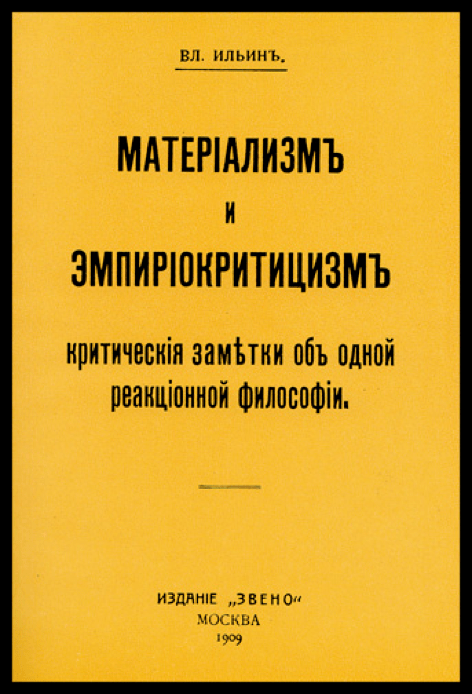
Lénine, Saussure et la théorie des hiéroglyphes
Patrick Sériot
Universités de Lausanne et de Saint-Pétersbourg
Introduction
La réception positive de Saussure est bien connue, elle est au fondement des manuels de linguistique générale dans la plupart des pays. Curieusement, on s’attarde beaucoup moins sur sa réception négative, sinon pour la rejeter dans l’enfer des erreurs comme étant aussi dépourvue de pertinence que l’histoire du phlogiston pour la chimie ou des esprits animaux pour la médecine.[1]
Il me semble cependant qu’il y a mieux à faire que l’ignorance volontaire en ce domaine, et qu’une étude minutieuse de cette réception négative pourrait nous éclairer sur certains aspects de la théorie et de la pratique saussuriennes.
Ainsi en va-t-il d’une accusation qui, en URSS des années 1920-30-40 valait comme anathème : Saussure serait le promoteur de la « théorie des hiéroglyphes en linguistique », thème extrêmement mal documenté dans la littérature linguistique en Occident. Or cette accusation soulève, à mon avis, un problème épistémologique de première importance.
Qu’est-ce que la théorie des hiéroglyphes en linguistique ? Quel est le sens de cet anathème ? Que peut-il nous apprendre 1) sur Saussure, 2) sur ses détracteurs ?
L’association inédite de Saussure aux hiéroglyphes est un témoignage du milieu culturel et intellectuel soviétique de l’époque tout autant que politico-idéologique. Le thème plus général de la réflexion sur le langage et le signe en Russie soulève à son tour une comparaison dans l’espace et le temps : la vie intellectuelle en Russie fait-elle partie de la « tradition occidentale » ? si oui, pourquoi en est-elle si souvent écartée ? si non, quelle en est la spécificité ? Et d’autre part, les parallèles avec une autre époque où l’on s’interrogeait sur la nature et l’origine du langage, à savoir les XVIIème et XVIIIème siècles européens, sont si nombreux qu’une comparaison s’impose.
De cette vaste série de questions on ne traitera ici qu’une infime partie : l’interprétation de la linguistique saussurienne comme une « théorie des hiéroglyphes » en URSS jusqu’à l’extinction progressive de l’ère stalinienne (milieu des années 1950).
Il faudra dans un premier temps retracer les étapes terminologiques et conceptuelles de l’interprétation des hiéroglyphes égyptiens, puis explorer le contexte idéologique et philosophique de l’emploi métaphorique de ce terme dans le marxisme soviétique ; et enfin examiner les arguments de la critique soviétique de Saussure à travers cette notion de hiéroglyphe. Sémiotique et philosophie du langage en tireront peut-être quelque nouvel éclairage. Read more ›
Posted in Article
PhD Position KU Leuven: Languages Writing History
KU Leuven is advertising a four-year PhD position at the Faculty of Arts as part of the FWO-funded project “Languages writing history: the impact of language studies beyond linguistics (1700-1860)”. The aim of this project is to study the history of the language sciences and the formation of linguistics as a discipline from a ‘post-disciplinary’ point of view: how the study of language evolved from an instrumental subject into an autonomous domain, how it affected other fields of study, and what was lost in the process of discipline formation. The selected candidate will pursue a research project that addresses these issues under the supervision of Dr Toon van Hal (Historical, Comparative, and Applied Linguistics) and Dr Floris Solleveld (Cultural History since 1750). Read more ›
Posted in Jobs and funding
Recent publications in the history and philosophy of the language sciences – May 2020
Beata SHEYHATOVITCH & Almog KASHER. 2020. From Sībawayhi to ʾAḥmad Ḥasan al-Zayyāt: New Angles on the Arabic Linguistic Tradition. Leiden:Brill. Studies in Semitic Languages and Linguistics, Volume, 101. ISBN : 978-90-04-42321-3
Publisher’s website

From Sībawayhi to ʾAḥmad Ḥasan al-Zayyāt: New Angles on the Arabic Linguistic Tradition, a volume edited by Beata Sheyhatovitch and Almog Kasher, brings together nine articles written by leading scholars of the Arabic linguistic tradition. These articles trace the development of the tradition, from Sībawayhi to modern Arabic language academies. The authors shed light on lesser-known aspects of this tradition, such as little-investigated grammatical structures, and problematic spots of the ʿamal theory and the grammatical terminology. They explore the discipline’s relations with stylistics and logic, the Arab grammarians’ influence on Jewish Bible exegesis, and modern applications of medieval Arabic grammatical theory. This volume showcases the richness of the medieval Arabic linguistic literature and the diversity of ideas found within it.

 History and Philosophy of the Language Sciences