
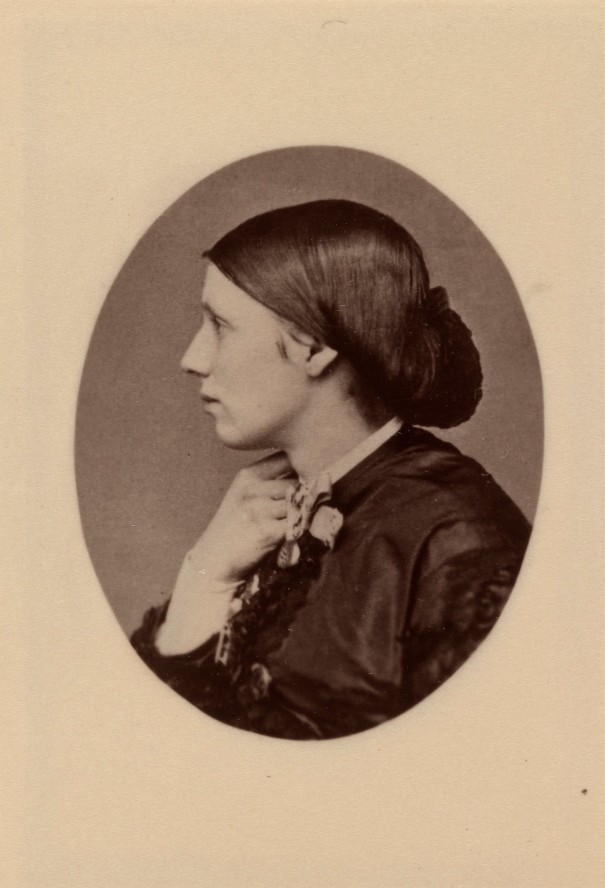
In this interview, we talk to H. Walter Schmitz about pioneer of semiotics Victoria Lady Welby.
Read more ›
In this interview, we talk to H. Walter Schmitz about pioneer of semiotics Victoria Lady Welby.
Read more ›James McElvenny & Andrea Ploder, ed. 2021. Holisms of communication: The early history of audio-visual sequence analysis. Berlin : Language Science Press. 268 p. ISBN : 978-3-98554-017-4
Publisher’s website
central pillar of contemporary communication research is the analysis of filmed interactions between people. The techniques employed in such analysis first took on a recognizably modern form in the 1970s, but their roots go back to the earliest days of motion picture technology in the late nineteenth century. This book presents original essays accompanied by written responses which together create a dialogue exploring early efforts at audio-visual sequence analysis and their common goal to capture the “whole” of the communicative situation.
The first three chapters of this volume look at the film-based research of Gestalt psychologists in Berlin as well as psychologists in the orbit of Karl and Charlotte Bühler in Vienna in the first decades of the twentieth century. Most of these figures – along with many other Central European scholars of this era – were driven into exile in the United States after the rise of National Socialism in the 1930s. This scientific migration led to the cross-pollination of communication studies in America, an outcome visible in the leading project in interaction research of the mid-twentieth century, the Natural History of an Interview. The following two chapters examine this project in its historical context. The volume closes with a critical edition of a treasure from the archives: the transcript of a speech delivered by Ray Birdwhistell, a key participant in the Natural History of an Interview project and founder of kinesics.
The book is downloadable here.
Read more ›
In this episode, we take a step back to explore the earliest beginnings of functional linguistics as represented by the work of Philipp Wegener.
Read more ›Dear colleagues,
With the northern summer now in full swing, let us aid in your aestivation with some recent delights from hiphilangsci.net. In the past year we have not only continued our tradition of scholarly blog posts, but also – like many in this age of lockdowns and quarantine – finally embraced the retrofuturistic dream of videophones and teleconferences. Join us on our audio-visual adventures in videos and podcasts.
Best regards,
Chloé Laplantine & James McElvenny

Interview 1:
The Owl of Minerva takes flight only when dusk begins to gather”
Inverview with Sylvain Auroux
Racialization, language science, and nineteenth century anthropometrics
by Margaret Thomas (Boston College)
Significs and Jacques van Ginneken
by Els Elffers (University of Amsterdam)
Death of a purist or how Dutch appeared to be a dangerous mother tongue
by Camiel Haman (University of Amsterdam/Adam Mickiewicz University Poznań)
The return of the human in the study of writing
by Piers Kelly (University of New England)
A Danish Framing of Roman Jakobson’s American Years – Review of From the early years of Phonology
by Patrick Flack (University of Fribourg)
History of Linguistics in East and South-East Asia
Quang Anh Le, Time-marking particles and the problem of grammatical categorisation in Vietnamese: From French colonialism to the post-Cold War era
Edward McDonald, Ma Jianzhong and the perils of being a pioneer
History of Linguistics in Australia
Jane Simpson, Grammars for analysis, grammars for learners
William McGregor, From Herman Nekes notebooks to Nekes & Worms 1853
David Moore, Developments in grammatical analysis of Central Australian languages 1890–1910
The Facts of Whorf’s Hopi Research
by Penny Lee
Through short talks and interviews, the hiphilangsci podcast offers an overview of some of the main currents in disciplinary linguistics from the nineteenth century to the present. So far we’ve made it to the early twentieth century, and we’ll continue our journey with new episodes after the northern summer.
You can follow the podcast on Apple Podcasts, Spotify, Google Podcasts, and wherever good podcasts are available.
Christelle Dodane & Claudia Schweitzer, dir. 2021. Histoire de la description de la parole : de l’introspection à l’instrumentation. Paris : Champion. Bibliothèque de grammaire et de linguistique, 65. 406 p. ISBN : 9782745355959
Publisher’s website
L’objectif de ce livre est de retracer les changements qui se sont opérés dans la description de la parole du XVIe jusqu’au début du XXe siècle et de rassembler des travaux de spécialistes de différentes époques historiques et spécialités, qui sont généralement traitées séparément. C’est ce croisement interdisciplinaire qui permet de montrer et d’expliquer de manière fine le passage progressif d’une méthode introspective utilisée par les anciens grammairiens à une méthode de type expérimentale utilisée par les phonéticiens de la fin du XIXe siècle. Grâce aux différentes spécialités des auteur(e)s (histoire de la langue, articulation, prosodie, phonétique, acoustique, prononciation, phoniatrie, musicologie, rhétorique, gestualité), il est possible d’aborder une variété de méthodes et d’approches d’étude de la langue parlée.
Organisé en trois parties, cet ouvrage propose une description de la prosodie du XVIe au début du XXe siècle, de l’articulation des sons de la parole et présente ensuite des travaux qui allient une description historique à des méthodes d’analyse contemporaines.
Il convie ainsi le lecteur à cheminer au cours des siècles et à découvrir, en compagnie des différents auteur(e)s qui ont contribué à la richesse de cet ouvrage, l’évolution de la pensée et de la description de la parole qui en découle, tout en s’inscrivant dans les courants esthétiques et culturels de chaque époque.
Table of contents

In this episode, we talk to Chloé Laplantine about the life and work of French structuralist Émile Benveniste.
Read more ›The main theme of InterAb 12 will be “Linguistics Challenges in Open Science”. This edition will be completely online. Proposals in all areas of linguistics are welcome. Papers covering the main theme will be considered for keynote.
All InterAb12 activities will be broadcast on Abralin’s YouTube channel with free and open access to everyone.
Submission deadline: 15 July (talks), 31 July (posters)
Further information: https://interab12.abralin.org/en/about/
Velmezova, Ekaterina, ed. 2020. La Discussion Linguistique de 1950: 70 Ans Après [Epistemologica et Historiographica Linguistica Lausannensia 2]. Faculté des lettres, UNIL & Индрик. Lausanne & Moscou. 194 p. ISBN : 978-5-91674-626-6
Publisher’s website

The authors of the volume – researchers from Switzerland, Russia, Georgia, France, Estonia and Finland – share their thoughts on an event that occurred seventy years ago: the famous linguistic discussion that took place in the Soviet Union in 1950 and which radically changed the Soviet humanities. Articles published in Russian, French and English discuss the general context of the Soviet era that made the discussion possible, the Soviet languages and “national linguistic traditions” that were in one way or another influenced by or referred to in the discussion and the reception of the discussion in the West.
Read more ›Monday 21 June 2021, 11:00am CEST
The “Political” and the Language-Dialect Dichotomy, or Fact-Checking Noam Chomsky
Alexander Maxwell (Victoria University of Wellington)
In this talk, Alexander Maxwell suggests that linguists pondering the language-dialect dichotomy fall into two schools: apolitical agnostics who view the dichotomy as something political and therefore not linguistic, and objective assertionists, who declare the dichotomy ought to be analyzed on linguistic grounds to the exclusion of political factors. Since Noam Chomsky seems to straddle both schools, the paper then examines his comments on the dichotomy at length, fact-checking assertions concerning the linguistic diversity of Romance and Chinese and the putative scholarly consensus about Dutch and German. The extraordinary role of “the political” as a bugbear in linguistic thought also informs how scholars invoke the Weinreich witticism, and why it generates so much cognitive dissonance.
Please register using this form to receive the Zoom link to the talk: https://forms.gle/Dfc9w93rk8UuFzs77
This talk is organized by Raf Van Rooy (University of Oslo & KU Leuven Center for the Historiography of Linguistics), and partly frames the course “The history of western linguistics: A survey in myths”, taught at the University of Graz this spring.
In this episode, we enter the age of classical structuralism by exploring the phonological research of Roman Jakobson and his colleague Nikolai Trubetzkoy undertaken within the Prague Linguistic Circle.
Read more ›

