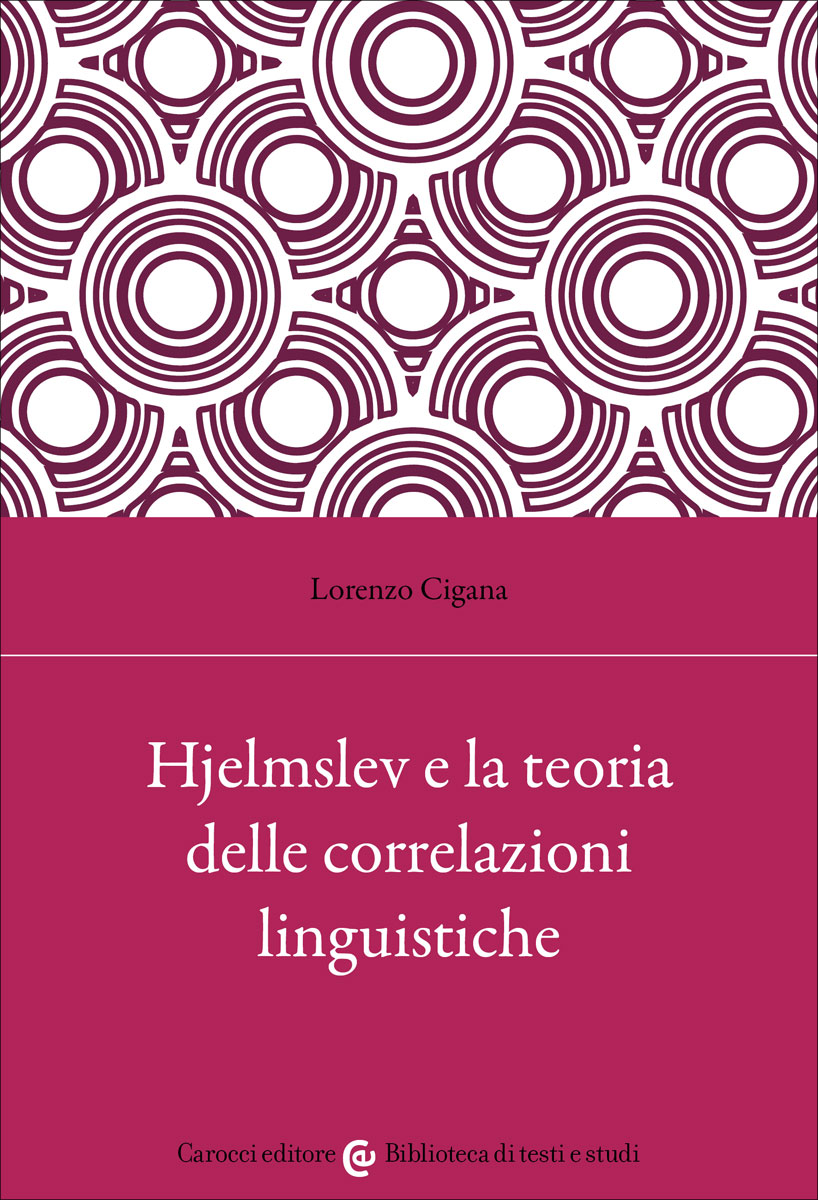
In this interview, we talk to Lorenzo Cigana about Louis Hjelmslev and the Copenhagen Linguistic Circle.
Read more ›
In this interview, we talk to Lorenzo Cigana about Louis Hjelmslev and the Copenhagen Linguistic Circle.
Read more ›
Martin KonviÄka (Freie UniversitĂ€t Berlin)*
1 Colorless green ideas
In the opening pages of his Syntactic Structures (1957: 15)[1], Noam Chomsky demonstrates the independence of grammar (or syntax) from semantics by referring to the meaningless, yet grammatically well-formed â and by now famous â utterance in (1). He contrasts it with a very similar one (2) which is, however, due to its different word order neither meaningful nor well-formed.
(1) Colorless green ideas sleep furiously.
(2) *Furiously sleep ideas green colorless.
Apart from being widely debated in linguistic and philosophical texts, the sentence in (1) has become a cultural phenomenon and even an inspiration for literature and music.[2] Although arguably the best-known example of its kind, Chomskyâs colorless green ideas is not the first instance of such an example, as I will show in this blog post.
Read more ›Antoinina Bevan Zlatar, Mark Ittensohn, Enit Karafili Steiner & Olga Timofeeva, ed. 2021. Words, Books, Images, and the Long Eighteenth Century. Amsterdam: John Benjamins. FILLM Studies in Languages and Literatures, 16. 252 pp. DOI: https://doi.org/10.1075/fillm.16
Publisher’s website
The essays collected in this volume engage in a conversation among lexicography, the culture of the book, and the canonization and commemoration of English literary figures and their works in the long eighteenth century. The source of inspiration for each piece is Allen Reddickâs scholarship on Samuel Johnson (1709-1784), the great English lexicographer whose Dictionary (1755) included thousands upon thousands of illustrative quotations from the âbestâ authors, and, more recently, on Thomas Hollis (1720-1774), the much less well-known bibliophile who sent gifts of books by a pantheon of Whig authors to individuals and libraries in Britain, Protestant bastions in continental Europe, and America. Between the covers of Words, Books, Images readers will encounter canonical English authors of prose and poetryâBacon, Milton, Defoe, Dryden, Pope, Richardson, Swift, Byron, Mary Shelley, and Edward Lear. But they will also become acquainted with the agents of their canonization and commemorationâthe printers and publishers of Grub Street, the biographer John Aubrey, the lexicographer and biographer Johnson, the bibliophile Hollis, and the portrait painter Reynolds. No less crucially, they will meet fellow readers of then and nowâwomen and men who peruse, poach, snip, and savour a bookâs every word and image.
Read more ›
In this interview, we talk to Noam Chomsky about the intellectual environment in which generative grammar emerged.
Read more ›26â30 August 2024, Tbilisi, Georgia
Hosted by
The Sixteenth International Conference on the History of the Language Sciences, ICHoLS XVI, will be held from 26 to 30 August 2024 in Tbilisi, Georgia.
Read more ›Online workshop, 1â2 December 2022
Organisers: James McElvenny and Clara Stockigt
This workshop will bring together linguists, anthropologists and historians to discuss the history of the documentation, description and revival of the Aboriginal languages of Australia. Central questions to be addressed by the workshop include:
Read more ›
In this interview, we talk to Christopher Hutton about linguistic scholarship under National Socialism and how this relates to linguistics today.
Read more ›
With the recent passing of Konrad Koerner on 6 January 2022, we offer here as a tribute to his life and work some excerpts from a previously unreleased biographical interview, recorded on 2 January 2019 at his apartment in Prenzlauer Berg, Berlin.
In the two excerpts selected here he describes first how he established his publishing relationship with John Benjamins of Amsterdam and then how he came to organise the first ICHoLS conference in Ottawa in 1978.
In this episode, we look at psychologist Karl BĂŒhler’s (1879â1963) Organon model of communication and observe its influence on the linguists Nikolai Trubetzkoy (1890â1938) and Roman Jakobson (1896â1982), who were associated with the Prague Circle.
Read more ›On 8â11 June 2022, the 31st International Colloquium of the âStudienkreis âGeschichte der Sprachwissenschaftââ (SGdS) on Language and Language Awareness in the History of Linguistics will take place at the Europa-UniversitĂ€t Flensburg.
The choice of topics may range from antiquity to the present.
Read more ›