McElvenny, James. 2024. A History of Modern Linguistics: From the Beginnings to World War II. Edinburgh: Edinburgh University Press. 208 p. ISBN 9781474470025 Publisher’s website
In this book, McElvenny offers a concise history of modern linguistics from its emergence in the early nineteenth century up to the end of World War II. Written as a collective biography of the field, it concentrates on the interaction between the leading figures of linguistics, their controversies, and the role of the social and political context in shaping their ideas and methods. While A History of Modern Linguistics focuses on disciplinary linguistics, the boundaries of the account are porous: developments in neighbouring fields – in particular, philosophy, psychology and anthropology – are brought into the discussion where they have contributed to linguistic research.
On 28 May 1940, a group of 33 people met at the British and Foreign Bible Society headquarters (‘Bible House’) in London for a conference on African languages. The evacuation at Dunkirk was under way; the sea was full of U-boats; on the morning of the conference, the news arrived of the Belgian capitulation. What better moment to discuss the state of Biblical translation on the African continent? The conference report contrasted the shared sentiment that “lights were going out one by one in Europe” with the “unquenchable optimism” of those present, “a band of men moving towards the sunlight”; the opening speaker called to mind that the BFBS had also been founded at a time when Napoleon was plotting his invasion of England.
The occasion for the conference was to discuss a series of reports by the BFBS secretary for Africa, W.J. Wiseman, and the outcomes of a questionnaire sent out to missionaries and missionary societies (all in BFBS archives, Cambridge University Library: GBR/0374/BFBS/BSA/F2/9/8, marked as ‘confidential’; no outcomes of the conference seem to have been published). Between 1937 and 1939, Wiseman had made two large inspection tours along missionary stations and Bible colporteurs in sub-Saharan Africa and on the larger islands, covering more than 40,000 miles by plane, boat, lorry, and any other means of transport. The purpose of this was to survey the efficacy of Bible translations. While the BFBS mission was to make the Bible available to all people in their own language, in practice the cost and difficulties associated with producing a full translation – printed and shipped from Britain – were proportionally larger for smaller languages, and the reliability of the translations hard to ascertain except in situ. Meanwhile cheap Bibles were being mass-produced in European languages; Wiseman quotes customer complaints that “The price of a small French New Testament in Douala was 2 francs, while a New Testament in the local language (in the same bookshop) was priced 10 francs. The African cannot understand why prices to Europeans are so much lower. We point out that the books are smaller; then he, too, wants a smaller book.”
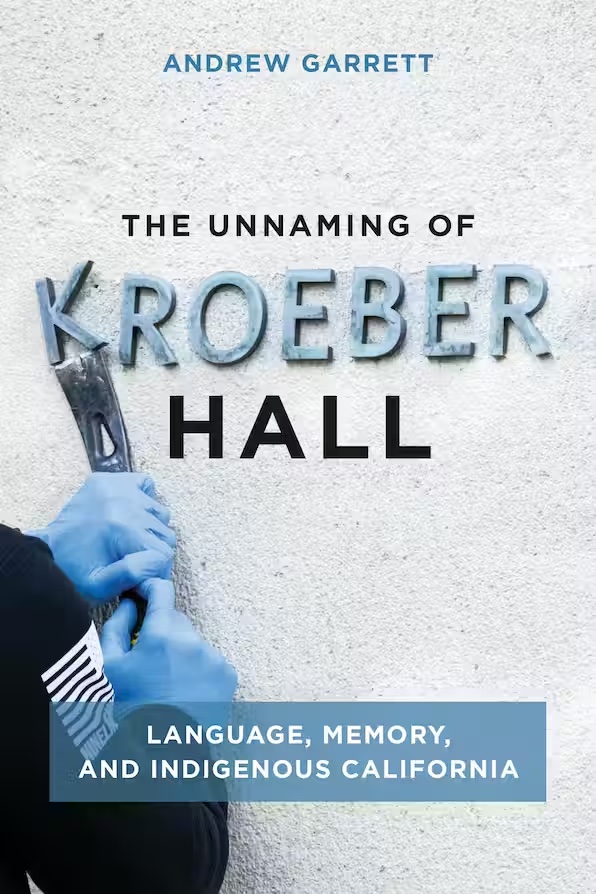
Garrett, Andrew. 2023. The Unnaming of Kroeber Hall. Language, Memory, and Indigenous California. Cambridge: MIT Press. 472 p. ISBN 9780262547093 Publisher’s website
In January 2021, at a time when many institutions were reevaluating fraught histories, the University of California removed anthropologist and linguist Alfred Kroeber’s name from a building on its Berkeley campus. Critics accused Kroeber of racist and dehumanizing practices that harmed Indigenous people; university leaders repudiated his values. In The Unnaming of Kroeber Hall, Andrew Garrett examines Kroeber’s work in the early twentieth century and his legacy today, asking how a vigorous opponent of racism and advocate for Indigenous rights in his own era became a symbol of his university’s failed relationships with Native communities. Garrett argues that Kroeber’s most important work has been overlooked: his collaborations with Indigenous people throughout California to record their languages and stories. The Unnaming of Kroeber Hall offers new perspectives on the early practice of anthropology and linguistics and on its significance today and in the future. Kroeber’s documentation was broader and more collaborative and multifaceted than is usually recognized. As a result, the records Indigenous people created while working with him are relevant throughout California as communities revive languages, names, songs, and stories. Garrett asks readers to consider these legacies, arguing that the University of California chose to reject critical self-examination when it unnamed Kroeber Hall.
Workshop “Legacy materials as data sources for language description and documentation” Paris, Université Paris Cité April 11-12th, 2024
This workshop, to be held on April 11th and 12th 2024 in Paris, will bring together descriptive linguists who engage with legacy materials on their language (or language group) of specialization. The workshop will be co-hosted by the Histoire des théories linguistiques research group and the Cambridge Endangered Languages and Cultures Group and thus provide opportunities for exchange between historians of linguistics, field linguists and linguists working with endangered languages.
Tourette, Eric, ed. 2023. Les idées linguistiques des moralistes. Paris: Honoré Champion (Moralia). 200 p. ISBN 9782745360120 Publisher’s website
Observer comment vivent les hommes implique d’observer comment ils parlent : il était sans doute inévitable que l’analyse morale se tournât vers les questions linguistiques. Les moralistes ne sont-ils pas confrontés à l’usage, au même titre que les grammairiens ? Et les uns comme les autres ne posent-ils pas fatalement la question de la légitimité des normes ? De fait, il suffit de parcourir les œuvres respectives de Pascal, de La Bruyère, de La Rochefoucauld et de beaucoup d’autres moralistes pour constater à quel degré la question du langage les préoccupe : un langage qui s’avère souvent malmené ou perverti, où les mots ne signifient plus ce qu’ils sont censés signifier, où la communication se fait difficile. Ce n’est pas un hasard si l’abbé de Bellegarde imite avec le même naturel, au même moment, les remarques respectives de La Bruyère et de Vaugelas : c’est que du « remarqueur » au moraliste les affinités sont nombreuses, comme le goût des monstres, l’éclatement de la parole, le refus de légiférer… Le colloque dont le présent volume réunit les actes était donc l’occasion de nouer un dialogue entre spécialistes de littérature et spécialistes de linguistique. Ainsi apparut une vraie réciprocité des préoccupations pour les auteurs étudiés : si les moralistes au sens strict empiètent manifestement sur le terrain des grammairiens et des rhéteurs, en retour ces derniers abordent régulièrement de pures questions de morale.
Dagostino, Carmen, Marianne Mithun & Keren Rice. 2023. The Languages and Linguistics of Indigenous North America: A Comprehensive Guide, Vol 1. Berlin & Boston: De Gruyter Mouton. 767 p. ISBN 9783110597981. Publisher’s website
This handbook provides broad coverage of the languages indigenous to North America, with special focus on typologically interesting features and areal characteristics, surveys of current work, and topics of particular importance to communities. The volume is divided into two major parts: subfields of linguistics and family sketches. The subfields include those that are customarily addressed in discussions of North American languages (sounds and sound structure, words, sentences), as well as many that have received somewhat less attention until recently (tone, prosody, sociolinguistic variation, directives, information structure, discourse, meaning, language over space and time, conversation structure, evidentiality, pragmatics, verbal art, first and second language acquisition, archives, evolving notions of fieldwork). Family sketches cover major language families and isolates and highlight topics of special value to communities engaged in work on language maintenance, documentation, and revitalization.
Review of Morresi, Ilaria, ed. 2022. Cassiodorus. Institutiones humanarum litterarum. Textus Φ Δ. Turnhout: Brepols (Corpus Christianorum. Series Latina, 99A). 512 p. ISBN 978-2-503-59589-4. Publisher’s website
Anne Grondeux Université Paris Cité and Université Sorbonne Nouvelle, CNRS, Laboratoire d’histoire des théories linguistiques, F-75013 Paris, France
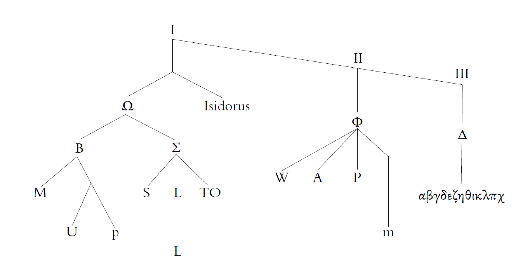
The Institutiones by Cassiodorus († c. 580) is a major work for the diffusion of knowledge in the medieval West (on Cassiodorus, one can learn much from the excellent chapter by Maïeul Cappuyns in Baudrillard 1949, and from the noteworthy synthesis by James O’Donnell 1979). This work circulated in several versions, one of which was authentic, i.e. in the form intended by Cassiodorus himself (tradition Ω, grouping together the Divine Institutions, Book I, and the Secular Institutions, Book II), the other two being interpolated, Φ and Δ, which only convey Book II. What justifies the new edition of the Φ and Δ versions by Ilaria Morresi (henceforth IM) is the fact that these texts, whose enrichments met the expectations of Carolingian scholars (p. 146*), were distributed incomparably more widely than the authentic version, preserved in nine manuscripts (compared with around sixty for Book I when it circulated alone, twelve for the Φ witnesses, and twenty-three for the Δ). The history of the Institutiones is well known since the work of Pierre Courcelle, who showed that the divergences of Φ and Δ from Ω could be explained by the fact that these texts went back to a state prior to Ω, the famous draft described in his 1942 article, “Histoire d’un brouillon cassiodorien”. This intuition was made possible by the excellent edition by Roger A.B. Mynors published in 1937, who, having identified the three traditions, produced the edition of the authentic form Ω, on the basis of the three ancient manuscripts B (Bamberg, Staatbibl. Patr. 61), U (Vatican, BAV, Urb. Lat. 67), M (Paris, Bibl. Mazarine, 660), while giving access to the other two, Φ and Δ. Since then, research on Cassiodorus and the various versions of the text has continued to develop (see in particular Holtz 1984). The article by Ilaria Morresi 2018, from which we borrow the family tree on page 217, is also worth consulting:
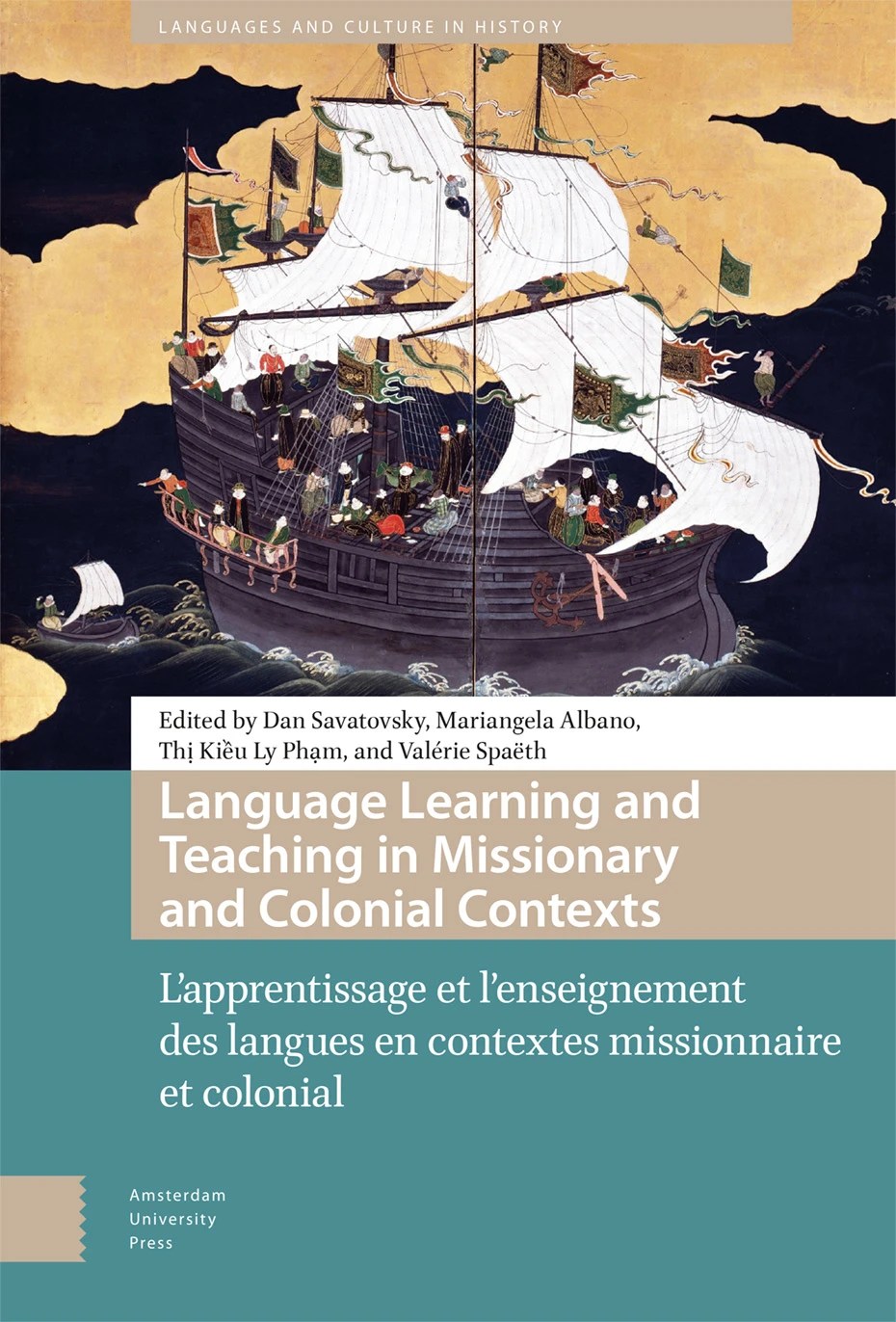
Savatovsky, Dan, Mariangela Albano, Thi Kieu Ly Pham & Valérie Spaëth, ed. 2023. Language Learning and Teaching in Missionary and Colonial Contexts. Amsterdam: Amsterdam University Press. 496 p. ISBN 9789463728249 Publisher’s website
This volume assembles texts dedicated to the linguistic and educational aspects of missionary and colonial enterprises, taking into account all continents and with an extended diachronic perspective (15th–20th centuries). Strictly speaking, this “linguistics” is contemporary to the colonial era, so it is primarily the work of missionaries of Catholic orders and Protestant societies. It can also belong to a retrospective outlook, following decolonization. In the first category, one mostly finds transcription, translation, and grammatization practices (typically, the production of dictionaries and grammar books). In the second category, one finds in addition descriptions of language use, of situations of diglossia, and of contact between languages. Within this framework, the volume focuses on educational and linguistic policies, language teaching and learning, and the didactics that were associated with them.
28-29 January 2027 Paris (France) SHESL Conference 2027
History of terminology – Diachronic terminology
The emergence of a terminological conscienceness





 History and Philosophy of the Language Sciences