Review: Iulianus Toletanus. Opera III: Ars grammatica. Ed. by José Carracedo Fraga

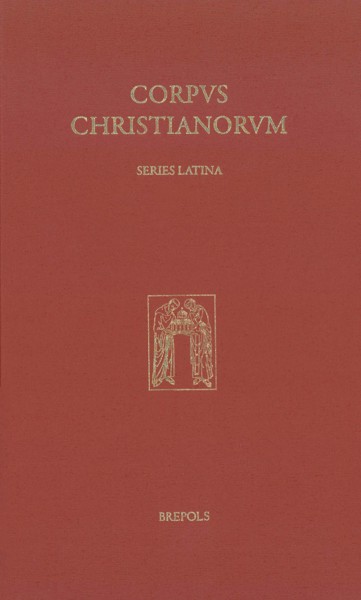
Iulianus Toletanus. Opera III: Ars grammatica. Ed. by José Carracedo Fraga, Turnhout, Brepols (Corpus Christianorum. Series Latina, vol. 115C). 2025. cxx + 608 p. ISBN 978-2-503-61423-6
Publisher’s website: https://www.brepols.net/products/IS-9782503614236-1

Review by Anne Grondeux (Université Paris Cité and Université Sorbonne Nouvelle, CNRS, Laboratoire d’histoire des théories linguistiques, F-75013 Paris, France)

The Ars attributed to Julian, Bishop of Toledo in the second half of the 7th century, is the last major grammar produced in Visigothic Spain. It has now been published in the Corpus Christianorum, Series Latina collection by José Carracedo Fraga (hereafter JCF), a specialist on this author (Carracedo Fraga 2005, 2006, 2013, 2014, 2015, 2016, 2021).

All evidence points to this treatise being a product of Visigothic Spain, and more precisely of Toledo (pp. VIII–X). Its origin is confirmed by proper names, both names of people and toponyms; by Hispanic sources; by examples specifically drawn from Hispano-Visigothic poetry (Juvencus, Prudentius, and especially Eugenius of Toledo, cf. Alberto 2016); by hymns unique to the Visigothic liturgy; and by variants of the Vetus Latina characteristic of Visigothic Spain. The dating is established by references to Visigothic rulers (which appear only in recension β, see below), namely Kings Ervigius (680–687, cited on pp. 35, 346 and pp. 63, 155) and Egica (687–701, cited on p. 447, 21). Since Julian himself died in 690, recension β would be situated toward the end of his life, between 687 and 690. Based on an Iberian tradition of the Ars Donati, Julian’s treatise follows the structure described as typically Spanish by Louis Holtz (1981, pp. 453–474).

Read more ›
Posted in Review

Call: CHSTM History of Language Sciences 2025–26

CHSTM Working group History of the Language Sciences. Meetings online, September 2025–May 2026

Archives scaffold research in both history and the sciences. Far from passive repositories, they assert order and give shape to the world. In the midst of what feels like daily media revolutions, archives have attracted widespread interest from historians of science in recent years. “The archive” has been newly re-conceptualized as a cross-disciplinary focus of reflection and analysis. At the same time, political impulses to de-colonize the archive, alongside the ambitions and anxieties made possible by new media, have motivated highly specific interventions in the discipline of linguistics. From the corpora of computational linguistics to the digitization of resources documenting endangered languages, linguists have reckoned explicitly and enthusiastically with the affordances of their collections.

In the 2025-26 academic year, our working group will explore the relationship between these two traditions of thinking with and about archives. What can a cross-disciplinary perspective bring to bear on the uniqueness of archival practices in linguistics? Reciprocally, how might the particularities of linguistics inform the broader historiographic conversation around archives in the sciences? Do examples of linguistic corpora, for example, resist the notion that archives are inherently historical or not? How might conversations about governance in other fields—botany, for instance—relate to practices in linguistics? We look forward to exploring such questions with interested scholars from any disciplinary background.

We welcome proposals for presentations in the next season of our working group. If you would like to present, please get in contact with Judy Kaplan (jrk@chstm.org), Raúl Aranovich (raranovich@ucdavis.edu) or James McElvenny (james.mcelvenny@mailbox.org). Thanks!

Posted in Announcements, Conferences and workshops

NAAHoLS 2026 Annual Meeting

Date: 8-11 January 2026
Place: New Orleans, Louisiana
Deadline for submission: 1 September 2025
Information: https://naahols.wordpress.com/annual-meeting/

The North American Association for the History of the Language Sciences (NAAHoLS) will hold its 2026 Annual Meeting in conjunction with the Linguistic Society of America (LSA) Annual Meeting in New Orleans, LA, from 8-11 January 2026. Founded in 1987, NAAHoLS has been meeting as a sister society of the LSA since 1989. We invite papers relating to any aspect of the history of the language sciences. Participants should plan for a 20 minute presentation, followed by 10 minutes for questions and discussion.

Abstracts should be submitted via EasyAbs (https://easyabs.linguistlist.org/conference/NAAHoLS2026/) following the directions below. Note that we ask you include both a longer 250-500 word abstract and a short (max 100 word) abstract; if accepted, the shorter abstract will be published in the LSA meeting handbook.
1. Authors: Enter author name(s) and affiliation(s)
2. Title: Enter the full title of your submission
3. Document: Upload a file (PDF is preferred) that includes 1) your title; 2) a 250-500 word abstract; and 3) a second short abstract of no more than 100 words. Please do not include your name or any identifying information in this document.
All presenters must be members of NAAHoLS as of the conference date, and will register using the LSA conference registration process. NAAHoLS members are able to register for and attend the full LSA meeting at a discounted member rate, whether or not they are members of the LSA.

The deadline for submission of abstracts is September 1, 2025 and
notification of acceptance can be expected by September 22, 2025.

Posted in Conferences and workshops

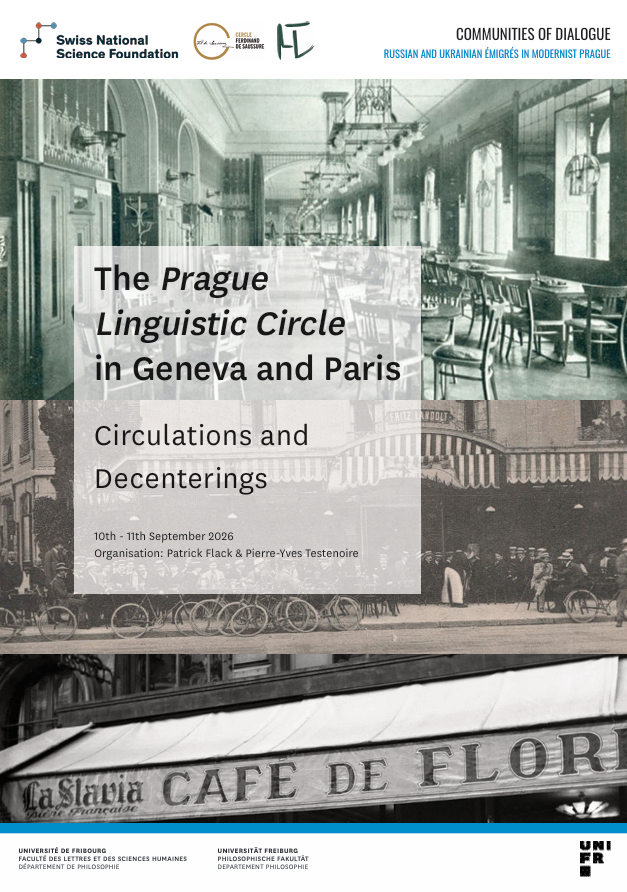
Cfp: The Prague Linguistic Circle in Geneva and Paris: Circulations and Decenterings

Date: 10-11 September 2026
Place: Fribourg (Switzerland)
Organizers: Pierre-Yves Testenoire & Patrick Flack
Information: https://comdial.sdvigpress.org/event-100897

The Prague Linguistic Circle holds a clearly defined place in the historiography of the language sciences: it is recognized as an institutional and localized “hub” (Hoskovec 2011) of programmatic innovation, representing a pivotal moment in the broad transition from 19th-century philological models to the new paradigms of 20th-century linguistics. While the Circle’s European and international influence—particularly the fundamental impact of its contributions to the development of structural phonology—is well known, most of its historians and commentators have focused primarily on its specific context in Prague itself (e.g., Vachek 1966, Viel 1984, Raynaud 1990, Toman 1995, Sériot 2012). In line with a certain cliché that casts the city of Prague as a “golem-like” site of magical encounters (Ripellino 1973, Flusser 1991), the Circle and its theoretical originality are often presented as the product of syncretism, or even as the precipitate of a kind of fusion between different traditions suddenly brought together in the capital of the new Czechoslovak state.

Read more ›
Posted in Conferences and workshops

Recent publications in the history and philosophy of the language sciences – June 2025

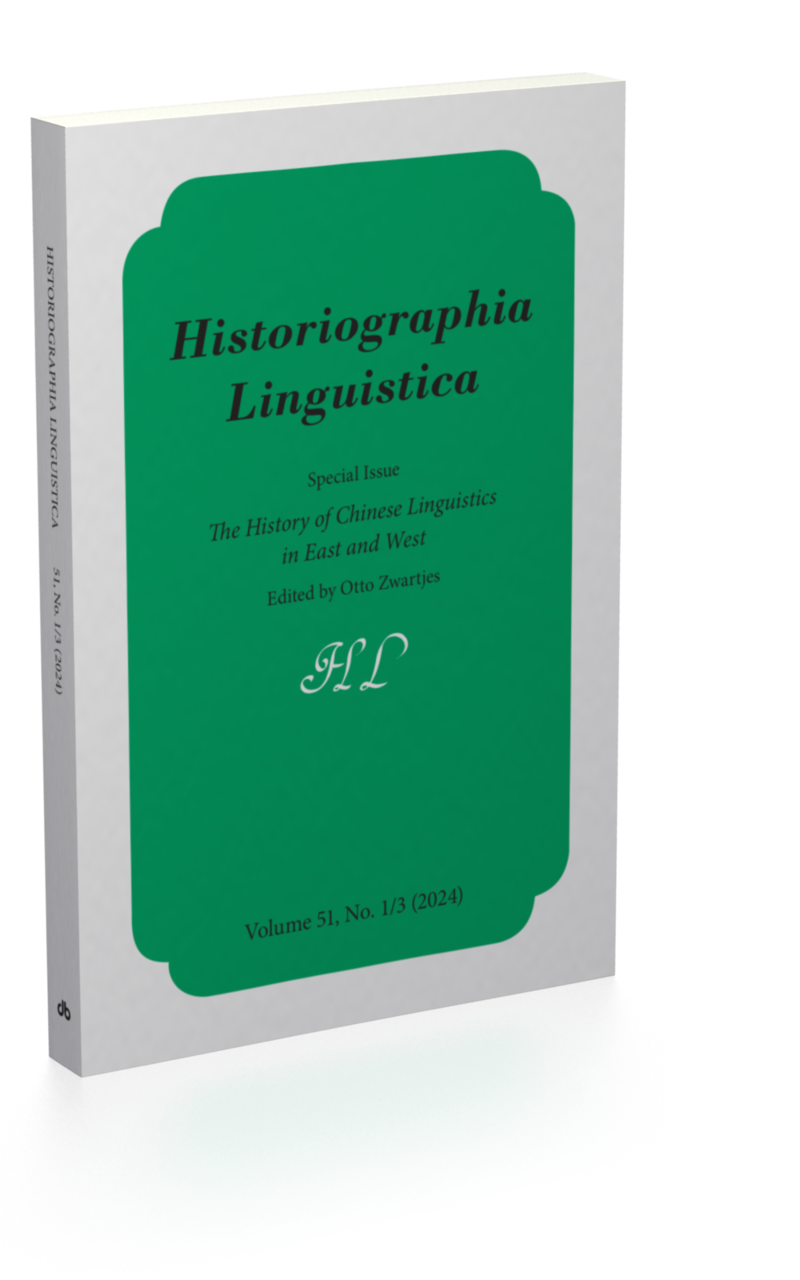
Zwartjes, Otto, ed. 2025. The History of Chinese Linguistics in East and West. [Special issue] Historiographia Linguistica 51(1-3). Amsterdam: John Benjamins. 385 p. ISSN 0302-5160. 
Publisher’s website

Introduction
The history of Chinese linguistics in East and West
Otto Zwartjes

Articles – Aufsätze
Misquoting the ancients: Editorial practices in the Kangxi zidian
Imre Galambos

“Este diccionario es su uso para leer libros”: The Vocabolarium Sinense–Hispanicum at the Biblioteca Universitaria di Genova
Daniele Quaggiotto

Exploring Chinese compound words in the anonymous Breve compendio del vocabulario de compuestos en lengua mandarina and other Western missionary dictionaries
Zuo Lu & Otto Zwartjes

Read more ›
Posted in Publications

Cfp: Asian Languages in the History of Lexicography

Date: 23-25 March 2026
Place: Montpellier (France)
Submission deadline: 15 October 2025
Information: https://chedil-alhl.sciencesconf.org

Asia is the cradle of important linguistic traditions and lexicography in particular has had a significant history in different Asian countries. Various forms of lexicographic works, such as wordlists, character primers and thesauri, were compiled in the Chinese and Indian linguistic traditions over 2,000 years ago (Hanks, 2013; Bottéro, 2019). These traditions are an essential part of the history of linguistics and world lexicography, and have only recently been recognized as such in global histories of linguistics (see Considine, 2019). These lexicographical traditions have specific genres, patterns and characteristics. Nevertheless, there have been many influences between the lexicographical traditions of different Asian countries. Examples include Chinese lexicographic genres adopted in Japanese and Korean lexicography or Manchu dictionaries and primers in Chinese (Söderblom Saarela, 2019) ; Malay wordlists written in Chinese characters (Van Hal, 2019).

Read more ›
Posted in Conferences and workshops

Recent publications in the history and philosophy of the language sciences – May 2025

Riolfi, Alessandro. 2025. The Parameter in Generative Grammar. A History of a Concept. Cambridge: Cambridge University Press. 348 p. ISBN  9781316516966
Publisher’s website

Focusing on the development of Noam Chomsky’s linguistic framework, this book is the first full-length, in-depth treatment of the history of the concept of parameter, a central notion of syntactic theory. Spanning 60 years of syntactic theory, it explores all aspects of its development through the different phases of the Chomskyan school, from the ‘standard theory’ of the mid-1960 to the current Minimalist Program. Emphasis is put on three main topics: the foundational issues in the formulation of the Principles and Parameters model; the original formulation of the “classical” parameters of the Government-Binding Theory of the 1980s (which are then evaluated from the perspective of Chomskyan thought today), and current debates on the nature of parametric variation in light of Generative Grammar’s most recent theoretical developments. Through step-by-step, detailed explanations, it provides the reader with a comprehensive account of both parametric theory and the development of Generative Grammar.

  • Debates the development of the concept of the parameter, a notion at the center of syntactic theory, from the 1960s to the present day
  • Provides step-by-step, detailed explanations and relevant quotations from the original works
  • Employs two methodological approaches: the first, historical and linear, traces the history of the concept of parameter; the second, critical in nature, analyzes how its changing formulations were problematized at different stages in the development of the theory
Read more ›
Posted in Publications

Podcast episode 46: Philip Kraut on Jacob and Wilhelm Grimm

A page from Jacob Grimm's Nachlass

In this interview, we talk to Philip Kraut about the brothers Jacob and Wilhelm Grimm, their scholarly contributions and political engagement.

Read more ›
Posted in Podcast

Recent publications in the history and philosophy of the language sciences – April 2025

Velmezova, Ekaterina, ed. 2024. Tartu in the History of Slavic Philology, vol. 2 : Jan Baudouin de Courtenay (1845-1929). Tartu: University of Tartu Press (Acta Slavica Estonica, 18). 160 p. ISBN 978-9916-27-795-9
Publisher’s webpage

Значение Тарту в истории филологии переоценить трудно. На протяжении долгого времени этот город находился — как находится и сегодня — на пересечении разных культурных и академических традиций, что во многом и обусловило как его богатейшую интеллектуальную историю, так и сегодняшнюю репутацию одного из важнейших университетских центров северной Европы. Несомненно значение академического Тарту и для истории славянской филологии — этой теме уже посвящались и многочисленные работы, и академические конференции. Научное сообщество продолжает размышлять над ней и сегодня. Тарту в истории славянской филологии посвящен и этот сборник, в котором приняли участие ученые, работающие в рамках разных академических дисциплин и научных традиций в нескольких странах; среди них — и лингвисты, и литературоведы, и историки науки. Продолжение работы над этой интереснейшей темой последует.

Read more ›
Posted in Publications

The Neogrammarians as a Scientific School?

Beijia Chen
Freie Universität Berlin

My dissertation, titled Die Junggrammatiker als wissenschaftliche Schule? – eine wissenschaftssoziologische Untersuchung anhand linguistischer Zeitschriftenzitationen aus einer Netzwerkperspektive (submitted in February 2025, Freie Universität Berlin)was recently discussed in episode 45 of the History and Philosophy of the Language Sciences podcast. However, the conversation primarily focused on the broader concepts and thoughts underpinning the research framework without delving into the details of the project. This post aims to share a more detailed account of the research, including its design, methodology, and key findings.

Read more ›
Posted in Uncategorized

Upcoming events


17–20 March 2026
Universitat Pompeu Fabra, Barcelona (Spain)
XV Congreso Internacional de la Sociedat Española de Historiografía Lingüística
Prescriptivism and descriptivism from the peripheries


23–25 March 2026
Montpellier (France)
Asian Languages in the History of Lexicography


2-4 September 2026
Nottingham (UK)
Henry Sweet Society Colloquium 2026
(Non-)Native Speakers in the History of Linguistic Ideas


10-11 September 2026
Fribourg (Switzerland)
The Prague Linguistic Circle in Geneva and Paris: Circulations and Decenterings


19-21 November 2026
Sofia (Bulgaria)
La linguistique ‘fonctionnelle’ cent ans après la fondation du Cercle linguistique de Prague


31 March–3 April 2027
Spain, Portugal
13th International Conference on Missionary Linguistics


23-27 August 2027
Niterói, Rio de Janeiro (Brazil)
ICHoLS XVII