
Reimann, Daniel, ed. 2024. Geschichte und Gegenwart der romanistischen Fachdidaktik und Lehrkräftebildung. Tübingen: Narr Francke Attempto Verlag. 548 p. ISBN 978-3-8233-8578-3
Publisher’s website

Die Fachdidaktik hat sich in den letzten Jahrzehnten in der deutschsprachigen Romanistik als eigenständige Teildisziplin neben Linguistik, Literatur- und Kulturwissenschaft etablieren können. Die Fachgeschichte dieser Teildisziplin bleibt indes zu schreiben. Während die Geschichte des Fremdsprachenunterrichts selbst – die bis ins 19. Jhd. hinein ganz überwiegend eine Geschichte des Unterrichts der romanischen Sprachen, insbesondere des Französischen, war – bereits relativ gut erforscht ist, bestehen im Bereich der Erforschung der Geschichte der Lehrkräftebildung in den romanischen Sprachen und der Geschichte der akademischen Disziplin Fachdidaktik noch große Lücken. Diesen Desiderata möchte der vorliegende Band begegnen, indem er unterschiedliche Untersuchungen und Einzelfallstudien zur Geschichte der romanistischen Fachdidaktik und Lehrkräftebildung seit dem 19. Jhd. vereint.
Charity Hudley, Anne H., Christine Mallinson, & Mary Bucholtz, ed. 2024. Decolonizing Linguistics. Oxford: Oxford University Press. 486 p. ISBN : 9780197755259
Publisher’s website
Book in open access
Decolonizing Linguistics, the companion volume to Inclusion in Linguistics, is designed to uncover and intervene in the history and ongoing legacy of colonization and colonial thinking in linguistics and related fields. Taken together, the two volumes are the first comprehensive, action-oriented, book-length discussions of how to advance social justice in all aspects of the discipline.
The introduction to Decolonizing Linguistics theorizes decolonization as the process of centering Black, Native, and Indigenous perspectives, describes the extensive dialogic and collaborative process through which the volume was developed, and lays out key principles for decolonizing linguistic research and teaching. The twenty chapters cover a wide range of languages and linguistic contexts (e.g., Bantu languages, Creoles, Dominican Spanish, Francophone Africa, Zapotec) as well as various disciplines and subfields (applied linguistics, communication, historical linguistics, language documentation and revitalization/reclamation, psycholinguistics, sociolinguistics, syntax).
Contributors address such topics as refusing settler-colonial practices and centering community goals in research on Indigenous languages; decolonizing research partnerships between the Global South and the Global North; and prioritizing Black Diasporic perspectives in linguistics. The volume’s conclusion lays out specific actions that linguists can take through research, teaching, and institutional structures to refuse coloniality in linguistics and to move the field toward a decolonized future.
De Waal, Cornelis, ed. 2024. The Oxford Handbook of Charles S. Peirce. Oxford: Oxford University Press. 696 p. ISBN 9780197548561
Page de l’éditeur
Charles Sanders Peirce (1839-1914) is likely the greatest philosophical thinker America has ever produced. His contributions to philosophy would inspire other American philosophers such as William James and John Dewey. Peirce’s contributions, however, extend far beyond philosophy proper. Interpreting logic as the discipline that is devoted to the question of how one should reason, he saw himself first and foremost as a logician, one inspired by the desire to penetrate into the logic of things. This, more than anything, enabled him to do ground-breaking work in a great variety of areas, including several that were yet to develop. In part because of this, Peirce has been called the American Aristotle and the American da Vinci. It is precisely this attitude of wanting to penetrate into the logic of things, and to develop the tools for doing so, that keeps Peirce relevant today.
The Oxford Handbook of Charles S. Peirce brings together thirty-four original essays on his work, showcasing state-of-the-art research in a broad variety of areas. Among other things, the Handbook touches upon phenomenology, logic, aesthetics, ethics, semiotics, physics, mathematics—and, of course, the tradition of pragmatism for which Peirce is well known as the founder, and which has enjoyed increased attention in recent years.
Danos, Félix & Simon Levesque, ed. 2024. Anthropologie sémiotique [thematic issue]. Cygne noir – Revue d’exploration sémiotique, 12. 172 p. ISSN 1929-0896
Publisher’s website
Journal in open access
Anthropologie sémiotique : interlocution transatlantique : introduction au 12e numéro du Cygne noir
Félix Danos et Simon Levesque
Sémiotique de la forme dialogique de la pensée : dialogues et interlocution comme objets d’enquête dans l’anthropologie linguistique française au xxie siècle
Bertrand Masquelier
Silverstein et Rancière : anthropologie sémiotique et politique
Quentin Boitel et Félix Danos
Sur l’idéologie sémiotique
Webb Keane
Un « corps » n’est pas qu’un corps. Catégories et sémiotique des instanciations corporées à Wallis
Sophie Chave-Dartoen
« Sì, pezzo di merda, tutto a posto » : analyse sociosémiotique d’un petit chahut en classe de français langue seconde
Annabelle Cara
Richardson, Alan & Adam Tamas Tuboly, ed. 2024. Interpreting Carnap. Critical Essays. Cambridge: Cambridge University Press. 324 p. ISBN 9781009098205
Publisher’s website
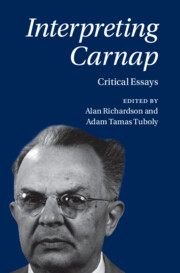
Rudolf Carnap (1891–1970), one of the most important philosophers of the twentieth century, helped found logical positivism, was one of the originators of the field of philosophy of science, and was a leading contributor to semantics and inductive logic. This volume of new essays, written by leading international experts, places Carnap in his philosophical context and studies his topics, his interests, and the major stages of his thought. The essays reassess Carnap’s place in the history of analytic philosophy through his approach to metaphysics, values, politics, epistemology and philosophy of science. They delve into important topics of Carnap’s mature thought, namely explication, naturalism, and his defence of analyticity; and they recover the logical and the linguistic components of philosophy and how they unfolded in the syntax-semantics relation, induction, and language-planning. The resulting interpretation of Carnap will be illuminating for both current and future research.
Akujärvi, Johanna & Kristiina Savin, ed. 2024. Reading, Writing, Translating: Greek in Early Modern Schools, Universities, and beyond. Lund: Faculty of Humanities and Theology, Lund University (Studia Graeca et Latina Lundensia, 29). 388 p. ISBN 978-91-89874-37-4 ; URN : urn:nbn:se:uu:diva-536295
Publisher’s website
Book in open access
This volume collects eleven studies that investigate different aspects ofthe teaching and learning of Greek in early modern northern Europe (c.1500–1750), from France in the west to Lithuania in the east. They giveimportant insights that advance our understanding of the homogeneitydespite diversity in the complex developments of classical reception, thestudy of Greek, its significance, and the practice of Greek in the variousreligious, cultural, and socio-political environments of the complicatedspatio-temporal and geopolitical realities of Europe.
Enenkel, Karl A. E. 2024. IV-5A Ordinis Quarti Tomus Quintus A: Apophthegmata (Liber V). Leyde : Brill (Opera Omnia Desiderii Erasmi – Erasmus, Opera Omnia). ISBN 978-90-04-44831-5
Publisher’s website
Enenkel, Karl A. E. 2024. IV-5B Ordinis Quarti Tomus Quintus B: Apophthegmata (Liber VI). Leyde : Brill. (Opera Omnia Desiderii Erasmi – Erasmus, Opera Omnia). ISBN 978-90-04-69064-6
Publisher’s website
Enenkel, Karl A. E. 2024. IV-6 Ordinis quarti tomus sextus. Apophthegmata I (Libri VII-VIII). Leyde : Brill. (Opera Omnia Desiderii Erasmi – Erasmus, Opera Omnia). ISBN 978-90-04-44832-2
Publisher’s website

This work provides a commented critical edition of Erasmus’s Apophthegmata (books V–VIII), the most successful early modern collection of memorable sayings and anecdotes. The substantial introduction analyses the genre of apophthegmata in antiquity, and the genesis, composition, sources and particularities of Erasmus’s work.
Haberpeuntner, Birgit. 2024. Walter Benjamin and Cultural Translation. Examining a Controversial Legacy. London: Bloomsbury Academic. (Bloomsbury Advances in Translation). 216 p. ISBN 9781350387188
Publisher’s website

Dissecting the radical impact of Walter Benjamin on contemporary cultural, postcolonial and translation theory, this book investigates the translation and reception of Benjamin’s most famous text about translation, “The Task of the Translator,” in English language debates around ‘cultural translation’.
For years now, there has been a pronounced interest in translation throughout the Humanities, which has come with an increasing detachment of translation from linguistic-textual parameters. It has generated a broad spectrum of discussions subsumed under the heading of ‘cultural translation’, a concept that is constantly re-invented and manifests in often heavily diverging expressions. However, there seems to be a distinct constant: In their own (re-)formulations of this concept, a remarkable number of scholars-Bhabha, Chow, Niranjana, to name but a few-explicitly refer to Walter Benjamin’s “The Task of the Translator.”
In its first part, this book considers Benjamin and the way in which he thought about, theorized and practiced translation throughout his writings. In a second part, Walter Benjamin meets ‘cultural translation’: tracing various paths of translation and reception, this part also tackles the issues and debates that result from the omnipresence of Walter Benjamin in contemporary theories and discussions of ‘cultural translation’. The result is a clearer picture of the translation and reception processes that have generated the immense impact of Benjamin on contemporary cultural theory, as well as new perspectives for a way of reading that re-shapes the canonized texts themselves and holds the potential of disturbing, shifting and enriching their more ‘traditional’ readings.
Rose, David. 2024. Languages of Australia’s First Peoples in Narrative. Australian Stories. London: Bloomsbury Academic (Bloomsbury Studies in Systemic Functional Linguistics). 400 p. ISBN 9781350413894
Publisher’s website

Celebrating the diverse languages of Australia’s First Peoples, this book presents stories told by elders in eighteen languages from around the continent, and explores their patterns of meaning.
The stories recount the experiences of the tellers and histories of their communities, from tales of anti-colonial resistance to origin stories of the Dreaming. The book aims to make the languages accessible and engaging through the voices of the elders, while building readers’ knowledge about language and language learning. It opens with some basic language knowledge for reading the stories. Each chapter then begins with the cultural and historical contexts of the stories, which are first previewed in English translation, then presented sentence-by-sentence, setting out the original sounds and wordings, glossed with plain English. Extracts are selected to illustrate patterns of meanings that are characteristic of each language. The final chapter sums up the various meaning patterns the stories use, and interprets their evolution in the light of First Peoples’ deep histories, as recorded by archaeology and traditional knowledge.
The book will be useful for language learning programs in communities and schools, for researchers of language and language teaching, and for any reader with an interest in the languages and cultures of Australia’s First Peoples.
Riley, Kathleen C., Bernard C. Perley, Inmaculada M. García-Sánchez, ed. 2024. Language and Social Justice. Global Perspectives. London: Bloomsbury Academic. (Contemporary Studies in Linguistics). 520 p. ISBN 9781350156241
Publisher’s website
Language, whether spoken, written, or signed, is a powerful resource that is used to facilitate social justice or undermine it. The first reference resource to use an explicitly global lens to explore the interface between language and social justice, this volume expands our understanding of how language symbolizes, frames, and expresses political, economic, and psychic problems in society, thus contributing to visions for social justice.
Investigating specific case studies in which language is used to instantiate and/or challenge social injustices, each chapter provides a unique perspective on how language carries value and enacts power by presenting the historical contexts and ethnographic background for understanding how language engenders and/or negotiates specific social justice issues. Case studies are drawn from Africa, Asia, Europe, North and South America and the Pacific Islands, with leading experts tackling a broad range of themes, such as equality, sovereignty, communal well-being, and the recognition of complex intersectional identities and relationships within and beyond the human world.
Putting issues of language and social justice on a global stage and casting light on these processes in communities increasingly impacted by ongoing colonial, neoliberal, and neofascist forms of globalization, Language and Social Justice is an essential resource for anyone interested in this area of research.
Vakoch, Douglas A. & Jeffrey Punske, ed. 2023. Xenolinguistics: Towards a Science of Extraterrestrial Language. London: Routledge. 248 p. ISBN 9781003352174.
Publisher’s website

Xenolinguistics brings together biologists, anthropologists, linguists, and other experts specializing in language and communication to explore what non-human, non-Earthbound language might look like. The 18 chapters examine what is known about human language and animal communication systems to provide reasonable hypotheses about what we may find if we encounter non-Earth intelligence.
Showcasing an interdisciplinary dialogue between a set of highly established scholars, this volume:
- Clarifies what is and is not known about human language and animal communication systems
- Presents speculative arguments as a philosophical exercise to help define the boundaries of what our current science can tell us about non-speculative areas of investigation
- Provides readers with a clearer sense of how our knowledge about language is better informed through a cross-disciplinary investigation
- Offers a better understanding of future avenues of research on language
This rich interdisciplinary collection, with chapter authors including Noam Chomsky, Derek Ball, Denise Herzing, and Irene Pepperberg, will be of interest to researchers and students studying non-human communication, astrobiology, and language invention.

 History and Philosophy of the Language Sciences
Leave a comment